"There can be no climate justice without the freedom to demand it," Marta Schaaf of Amnesty International said in a statement in advance of COP31 kicking off this week in Turkey, where experts and advocates have raised concern over recent raids on LGBTQ+ communities.
"She said that in Nepal, people see them with that same limited perspective. They see them as Kinnar women with powers or as sex workers, but they don’t see them as whole human beings," said Abinash Bikram Shah, director of Elephants in the Fog, on how a Kinnar mother inspired the film.
"Communities that are most affected by climate change are showing the world how to adapt," Bijal Brahmbhatt of Earthshot Prize finalist Mahila Housing Trust said in a short video recently shared on social media.
Risks for LGBTQ+ shadow COP, 1.5B in hotspots, women's phone tree, door-to-door diapers, Gaza toll after rain, anti-abortion "Don't Flush" bill, forest fire protests, bee-made "plastic"
"There can be no climate justice without the freedom to demand it," Marta Schaaf of Amnesty International said in a statement in advance of COP31 kicking off this week in Turkey, where experts and advocates have raised concern over recent raids on LGBTQ+ communities.
Update - Medical student knowledge of climate impacts on repro health: In September, CG looked at a study exploring Indian nursing students' awareness of the potential for climate change to affect reproductive health. It found that 48.4% of the 182 students surveyed had what the co-authors called "good knowledge" of the topic. A new study looked at "the knowledge, attitudes, and practices of future physicians in Egypt regarding climate change and health," according to the publication in Discover Public Health. It found that of over 800 medical students and interns, 94.3% were aware of climate change while 52.7% had knowledge of its links to social inequality and 45% had knowledge of its links to reproductive health.
➡️
Update - CEO of HERA named to TIME 100: This week, Kathy Baughman, founder and CEO of HERA, was named to TIME's list of the 100 Most Influential Climate Leaders. The nonprofit HERA — which stands for Heat Resilience Action — aims to improve health and economic circumstances for women in some of the most climate-impacted regions of the world. Earlier this year, CG covered the group's launch of the Heat Science Hotline and HERA Materna, an insurance program for heat-affected pregnant people.
In mid-September, numerous legacy news outlets, including the BBC, reported that dozens of people had been detained in "raids on gay bars and the homes of LGBTQ+ activists." Human Rights Watch also identified groups supporting people living with HIV as among the targets.
At the same time, Akın Gürlek, Turkey's Minister of Justice, posted on social media to announce that 162 people had been brought under investigation in an operation called "My Family Is Safe." President Recep Tayyip Erdoğan's administration has described the campaign as an effort to protect family values.
The BBC reported that the Turkish Human Rights Association posted its own message on social media: "The real name of this operation is not 'My Family is Safe'; it is state-led discrimination, politics of fear, and the dismantling of civil society."
In October, U.N.-appointed experts demanded the release of the detainees and "[urged] the Government to end criminal and financial investigations targeting LGBTI persons without a clear legal basis."
The nonprofit Trans Europe and Central Asia and several organizations supporting sex workers posted on social media last week to call on governments and communities participating in COP31 "to apply political pressure to stop the arrests and release all those in prison."
Days ahead of the start of COP31, the Women Gender Constituency — a stakeholder group recognized by the U.N. Framework Convention on Climate Change — and four other groups issued an open letter of "grave concerns" and warned that actions taken against LGBTQ+ people had "implications directly to the integrity and inclusivity of COP31."
On the eve of the conference, Amnesty International's climate director Marta Schaaf said in a statement: "There can be no climate justice without the freedom to demand it. Türkiye and all governments attending COP31 must protect peaceful protest and ensure affected communities carry more weight in negotiations than the fossil fuel industry."
1.5B women and girls are living in climate "hotspots" while 141M could face related poverty, U.N. says
A new fact sheet from U.N. Women says that at least one in three women and girls — or about 1.5 billion globally — live in climate "hotspots," where gender inequality, insecure employment, and climate threats converge.
Released on Tuesday at COP31, the fact sheet warns that an additional 141 million women and girls could live in extreme poverty by mid-century if global warming trends persist, giving rise to more extreme weather events.
According to U.N. Women, while 73% of countries' climate action plans acknowledge the gender-specific climate risks facing women and girls, only one in three address them completely and only 4% of climate-focused development assistance is allocated to gender equality.
U.N. Women, meanwhile, outlines its own essential recommendations, including investing in green jobs for women, supporting care work, protecting women environmental defenders, and fully funding the 2025-ratifiedBelém Gender Action Plan.
"Across the world, women are already leading the fight for a better future — in their communities, in laboratories, in parliaments, and on the frontlines of the climate crisis. We must give women and girls equal rights, resources, and the power to lead, and they will help drive the change our world so urgently needs," U.N. Women Executive Director Sima Bahous said in a press release.
Millions across multiple countries have been exposed to the toxic haze, which is known to pose unique health threats to children, older adults, people with preexisting conditions, pregnant people, and outdoor workers.
Protesters' demands include designating the fires a national disaster and holding accountable the people and companies responsible for their ignition.
According to The Straits Times, police have identified 20 companies as suspects. On Tuesday, Reuters reported that the Indonesian government would revoke land rights from at least eight companies "allegedly involved" in the fires.
Woman and children killed after sand embankment collapse following heavy rains in Gaza
A woman and three young children were killed after torrential rains in Gaza appeared to trigger the collapse of a sand embankment onto tents in a displacement camp.
Local officials said at least 70,000 tents were flooded amid heavy rains that began on Nov. 7, according to the Washington Post. The news outlet reported that medics said downpours had destabilized the embankment on Nov. 8, sending rock and sand into the living quarters.
Reuters said it had verified video showing residents attempting to dig the victims out from the debris.
The majority of the Gazan population lives displaced in camps and ruins amid ongoing conflict with Israel. In October, the U.N.'s International Organization for Migration said around 2 million people there needed effective shelter as this year's Super El Niño weather pattern threatens to worsen cold winter rains, flood damage, and waterborne illness. The U.N.'s Office for the Coordination of Humanitarian Affairs explained on Nov. 8 that "humanitarian funding and Israeli approvals are urgently needed" so that more than 150,000 already-purchased tents can reach those in need.
This past week's disaster may serve as a reminder of how conflict and climate disasters can compound safety risks, especially for vulnerable populations.
"Whoever did not die from bombs and missiles is dying from buildings collapsing on them, from the collapse of sand and mountains on them," said Amal Al-Zein, identified as a relative of the tent collapse victims, per Reuters.
Vanuatu women lead early warning system using mobile devices and word of mouth in "phone tree" of 12K+
Vanuatu women are behind an early warning system that leverages mobile phones and community networks to translate technical updates into practical guidance for residents of the South Pacific Ocean island nation.
"We translate the policy on the ground because we are living in our communities. We know our hazard. We know our terrain," Flora Vano of the nongovernmental organization ActionAid told Islands Business.
The NGO is helping to coordinate the initiative "Women Wetem Weta" along with the Meteorology Office, the Climate Change Department, and the National Disaster Management Office.
These agencies have long disseminated important scientific information, but it hasn't always reached women on the ground or made clear sense.
"We know our crops, we know our weather, we know our kids, we know our home, and we are Indigenous. So some of that language doesn't work for us," Vano told IB.
The initiative reportedly involves correspondents trained to distill short, accurate text messages, which are then sent to a network of around 5,000 mobile phone holders, including women and girls with disabilities. Local leaders are also organized to bring messages directly to households, so that families without phone access can still stay connected. Vano told ABC Pacific and FBC TV that the broader network includes more than 12,500 people.
And the communication can flow both ways — communities can give feedback, request certain information, and use the network to report evidence of environmental concerns back to the agencies.
According to Islands Business, when the initiative was presented at COP31 in Turkey earlier this week, presenters said that every $1 invested in this type of warning system could save $4.40 in humanitarian response costs.
The archipelago of Vanuatu faces multiple climate risks, including ocean warming, intensifying cyclones, rising sea levels, and saltwater intrusion.
Two women deliver diapers and more door-to-door after historic Florida floods
Two women and business owners who were themselves impacted by historic flooding in east-central Florida earlier this month have been going door to door in Brevard County to offer free emergency supplies.
The shocking storms that dumped at least 20 inches of rain on the region from Nov. 1 to Nov. 2 triggered flash floods that resulted in two deaths, damaged homes, sunk cars, and economic hits. This year's Super El Niño weather pattern likely contributed to the disaster, according to Central Florida Public Media.
Mariah Colon and Winnye Vicente told local news outlet ClickOrlando their own families were impacted, with Colon's home partially flooded. But both women, feeling grateful for having come through the storm without more damage, wanted to help support neighbors having a rougher time.
"We're two moms. We feel for the families that are out here," Colon told ClickOrlando.
The two women have been driving from street to street, knocking on doors, and distributing supplies they mostly bought themselves. Colon and Vicente — who have distributed items including food, bottled water, self-care items, and diapers — have also been accepting donations to help keep the effort going.
"Our town is only as big as we come together to make it," Vicente said. "You’re not alone."
Anti-abortion "Don't Flush" bill introduced in U.S. House
Introduced in the U. S. House of Representatives last week, a new bill —H.R. 10954 — would amend theFederal Food, Drug, and Cosmetic Act to "deem an abortion drug misbranded unless it contains a 'Do Not Flush' warning label." The bill, if passed and signed into law, would also require the packaging of abortion medications like mifepristone and misoprostol to include physical "catch kits" for preventing fetal tissue from being flushed down the toilet following the use of such a medication.
According to Newsweek, the legislation — titled the "Don’t Flush Babies Act" and introduced by South Carolina Representative Sheri Biggs — would also require prescribing clinicians to accept catch kits after they have been used by patients and then arrange for burial, cremation, and disposal of the material. Penalties for non-compliance proposed under the bill could include a fine of $20,000 to $150,000 and up to five years in prison.
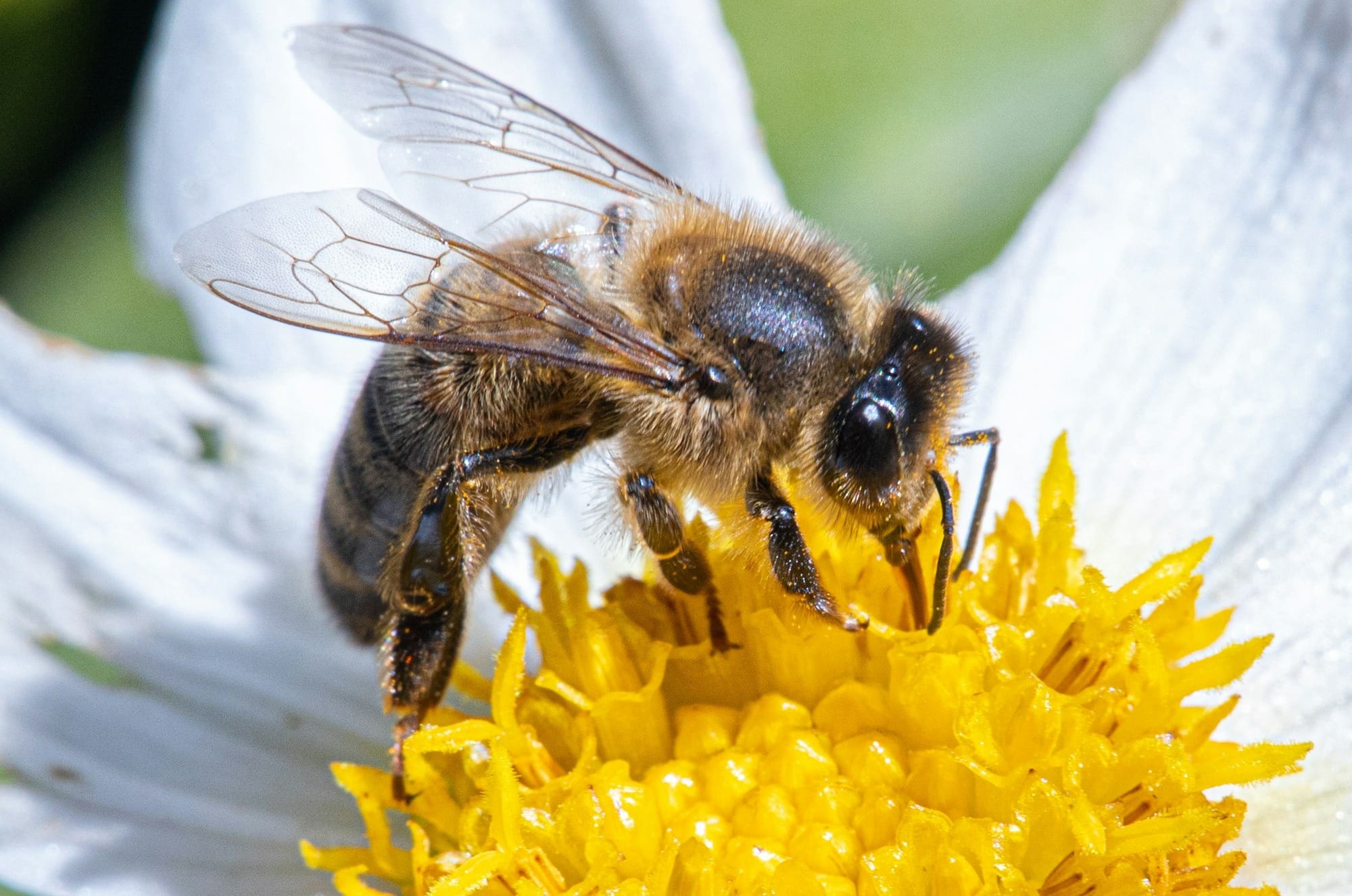
What is news is that — in addition to natural materials like corn and kelp — researchers may now be looking to bees to develop a bioplastic that might more easily and less harmfully break down without intensive composting.
Colletes inaequalis bees, or cellophane bees, appear to make a kind of plastic-like material that they use to protect their underground nests — nurseries to their young — from water and fungus.
U.S. researchers collected nest samples in Tennessee in 2023 and tracked changes in their "plastic" linings over the course of the next year. Their study, published in Proceedings of the National Academy of Sciences earlier this month, found that the bees' "plastic" began breaking down around the seven-month mark, crumbling more fully at 11 months.
If scientists can learn to replicate this material or how it behaves, it may be useful in reducing the waste left behind by single-use, fossil-fuel-based items — such as plastic water bottles — that are not generally intended to stick around long-term anyway.
Led by researcher and professor Jonathan Coote, the team may next learn more about what makes the bee "cellophane" so degradable, according to Earth.com. Could it be how its chemical "building blocks" are arranged? An enzyme in bee saliva? Microbes in the underground nests?
"The goal is to be able to answer that and then engineer it into something that we can make at scale," Coote said in a press release.
One goal at Climate, Gendered is to bring a spotlight to the reality that proliferating pollution, increasing temperatures, rising seas, extreme weather, habitat loss, and more can uniquely and disproportionately impact girls, women, and LGBTQ+ communities — especially individuals from communities of color, Indigenous people, disabled people, immigrants and displaced people, people experiencing poverty, and residents of low- and middle-income countries. We're also interested in the climate and environment crises and concerns that can disproportionately affect boys and men.
But there's a whole lot going on around the world, and this weekly brief isn't intended to be exhaustive but rather your chance to spend just a few moments on a handful of items — including the ideas that might make a difference. We appreciate your feedback and observations.
"She said that in Nepal, people see them with that same limited perspective. They see them as Kinnar women with powers or as sex workers, but they don’t see them as whole human beings," said Abinash Bikram Shah, director of Elephants in the Fog, on how a Kinnar mother inspired the film.
"Communities that are most affected by climate change are showing the world how to adapt," Bijal Brahmbhatt of Earthshot Prize finalist Mahila Housing Trust said in a short video recently shared on social media.
"He who destroyed the forests sleeps in air-conditioned rooms. He who toiled the soil wraps himself in a damp cloth." These are among the lyrics of the Sollisai Sistahs, an all-women rap group from Tamil Nadu featured on the new Climate Emergency Mixtape.
"We're concerned about what these effects might mean for contraceptive users exposed to ambient heat for many hours at a time, day after day, with little ability to adapt or recover … which is an unfortunate reality for many women living and working in [LMICs]," researcher Cara Schulte told CG.