"Communities that are most affected by climate change are showing the world how to adapt," Bijal Brahmbhatt of Earthshot Prize finalist Mahila Housing Trust said in a short video recently shared on social media.
"He who destroyed the forests sleeps in air-conditioned rooms. He who toiled the soil wraps himself in a damp cloth." These are among the lyrics of the Sollisai Sistahs, an all-women rap group from Tamil Nadu featured on the new Climate Emergency Mixtape.
"We're concerned about what these effects might mean for contraceptive users exposed to ambient heat for many hours at a time, day after day, with little ability to adapt or recover … which is an unfortunate reality for many women living and working in [LMICs]," researcher Cara Schulte told CG.
Solar dowries, "heat trapped" child care, hips hurt by water collection, cool roofs, weaponized floods, Kisumu's 5yr plan, WFH for air quality, trans icon inspires Green candidate
"Communities that are most affected by climate change are showing the world how to adapt," Bijal Brahmbhatt of Earthshot Prize finalist Mahila Housing Trust said in a short video recently shared on social media.
Update - Prenatal wildfire smoke exposure and autism risks: A large study published on Oct. 26 in JAMA Pediatrics has linked exposure to wildfire smoke during pregnancy, especially during the second and third trimesters, with higher risks of autism diagnosis in children. In its coverage of the results, Reuters Health Rounds underscored that the study, looking at data from more than 890,000 mother-child pairs, "was observational and cannot prove whether or how wildfire smoke causes autism." Lead author Stefania Papatheodorou of Rutgers University still told the outlet she recommends health care providers talk about exposure and mitigation during prenatal visits. The new findings align with research CG covered in February.
➡️
Update - Dolores Huerta dies at 96: Labor leader Dolores Huerta died on Oct. 28 at the age of 96. In the 1960s, Huerta co-founded what would become the United Farm Workers union along with Cesar Chavez and Gilbert Padilla. In March, she shared, in a multiyear New York Times investigation, that Chavez had assaulted her on multiple occasions. As CG noted earlier this year, Huerta's account could be seen to highlight a need for meaningful efforts to address gender-based violence at the intersection of immigrant rights, agricultural work, and environmental justice.
Guardian report alleges airstrikes trapped women and children on Somalian floodplain
An Oct. 26 report from the Guardian alleges that U.S.-linked airstrikes on southern Somalia pinned residents, including women and children, to flooded areas near the River Juba.
U.S. Africa Command — also known as AFRICOM — did not confirm what the news outlet described as "details of a seemingly accelerating campaign that has also raised questions over potential covert U.S. strikes." It also said it does not leverage extreme weather or target civilians.
Meanwhile, sources told the Guardian that military forces appeared to be "weaponizing" the potential for flooding amid the region's rainy season and as the Super El Niño weather phenomenon threatens to exacerbate heavy precipitation.
Researcher Jethro Norman of the Danish Institute for International Studies told the outlet that doing so would be "a reversal of process" since advance information about weather threats is typically used to reduce harm, not worsen it.
The allegations come less than a week after the publication of commentary in The BMJ asserting that "we lack evidence on the compounding effects of conflict and climate on women's and children's health."
Written by Tiziana Leone, a professor in health and international development at the London School of Economics and the Director of the Middle East Centre, the opinion piece calls for metrics that focus not only on immediate risks but also long-term implications of such compounding impacts.
Extreme heat is extending the workday and confining kids and caregivers to indoor "heat traps"
Abundant scientific evidence exists demonstrating extreme heat as a growing threat to global health, particularly among pregnant people, infants, and children. New research published in Geoforum finds that it is also disrupting the rhythm of daily life by shifting tasks to evening hours, extending workdays, and confining kids and caregivers to often insufficiently cooled indoor "heat traps" during sunny daytimes.
The ethnographic research used diaries and interviews from mothers and carers of children over two summers in Brazil to document physical sensations, cooling methods, and daily actions to manage heat. Participants "lived from inner-city favelas, including Santa Marta in Botafogo and São Carlos, to peripheral municipalities of the Baixada Fluminense such as Belford Roxo and Nova Iguaçu, on predominantly low to lower-middle incomes," the co-authors wrote.
The findings underscore the stark realities of care work in a warming and unequal world: As rising temperatures turn daylight into a health risk, the nighttime becomes the only safe time for work, travel, and social life at the expense of evening's essential function as a period of rest and regeneration.
The study also contends that "the costs of adaptation are absorbed through invisible and unevenly distributed care work, borne disproportionately by carers, most often mothers, and indirectly by children through reduced caregiver capacity."
The co-authors argue that including caregiving in climate adaptation plans, policy, and funding cannot focus on outdoor, daytime workers alone — it must also support the perpetual, back-to-back labor of carers managing indoor environments that, especially in low-resource settings, often lack effective cooling and water access.
Earthshot Prize finalists connect low-income women with cool roofs, climate insurance in India
Indian cities, like cities everywhere, are getting hotter. For more than 30 years, the Mahila Housing Trust — or MHT — in Ahmedabad, India, has been mobilizing women in urban areas to improve their housing and work environments, build climate resiliency, and engage in community-led local governance. Now, the organization is one of 15 finalists for the 2026 Earthshot Prize, a prestigious global award founded in 2020 by Prince William and The Royal Foundation to identify and scale impactful solutions to environmental challenges.
MHT's director, Bijal Brahmbhatt, identified three main heat solutions, co-developed by women, in a recent conversation with India Today: white-painted "cool roofs" that can reflect light and reduce indoor heat, heat insurance that triggers fixed payments to laborers once a certain unworkable temperature is reached, and city-level heat action plans that include cooling infrastructure, such as shelters, parks, and green spaces.
"Communities that are most affected by climate change are showing the world how to adapt," Brahmbhatt said in a recent social media post highlighting practical solutions to the extreme heat that affects not only women's ability to stay cool but also financially secure.
The Earthshot Prize winners will be announced in November. If awarded, the MHT will win £1 million (roughly $1.3 million USD), which could go a long way toward the organization's goals of protecting 3 million households with cool roofs and providing 300,000 women with climate insurance by 2030.
Kenyan county sketches 5-year plan to cope with rising temperatures, as many currently deal with impacts alone
Off the western Kenyan shoreline of Lake Victoria, Kisumu County government officials are working to develop a five-year plan to address extreme heat and its impacts on residents.
According to Kenyan News Agency, public participation forums were held Oct. 14-16 in sub-counties to analyze heat-related risks and map out potential solutions, including adding cool roofs and ventilation to existing homes to reduce indoor temperatures.
Neighborhood greening and cooling stations have also been proposed to help people escape dangerous outdoor temperatures. And solar-powered cold storage hubs could help cut down on pre-market spoilage of produce and fish.
The public forums came the same week as the publication of a new paper looking at the impacts of heat in Kenya. Published in Frontiers in Global Women's Health, the paper describes how pregnant and postpartum people are often coping with extreme heat in rural Kilifi alone and managing short-term relief that shifts rather than reduces risk — for example, sleeping outdoors for cooling purposes but then being exposed to mosquitoes.
The co-authors argue that adaptation requires better heat-health guidance and full-household engagement to help protect maternal and newborn well-being.
Families in Pakistan reportedly using solar panels as dowries
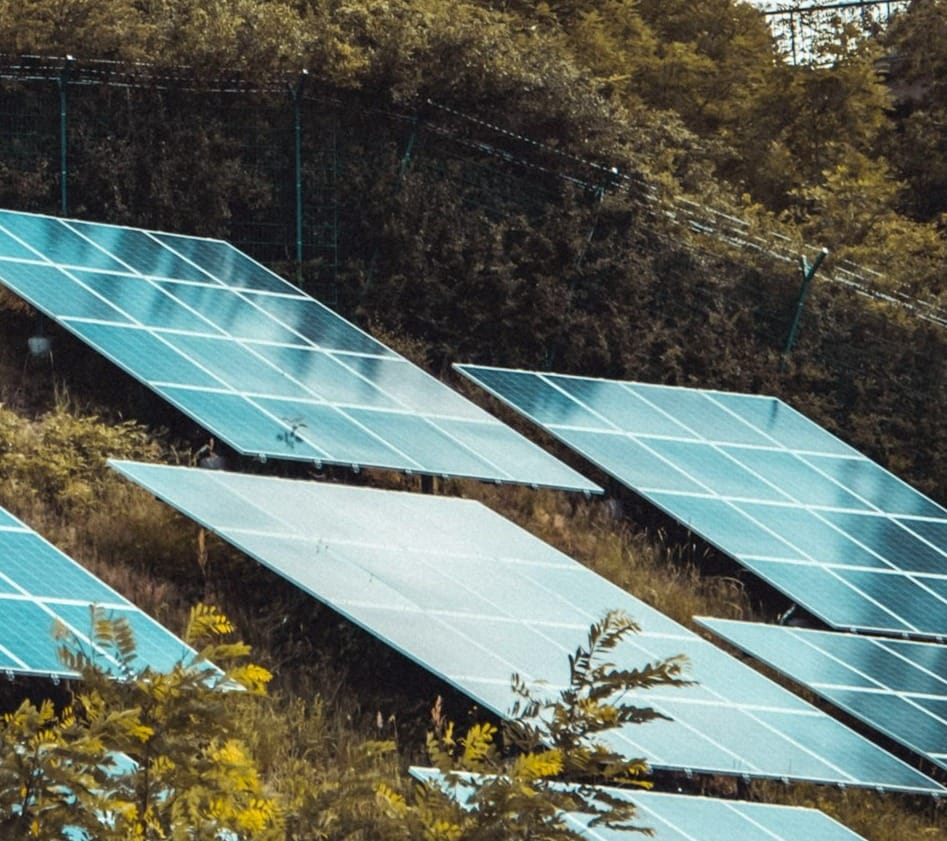
Solar power is now so popular in Pakistan that the panels appear to have become a part of some wedding dowries — the practice by which funds or valuable goods are transferred from a bride's family to a groom or his family.
The trend was reported earlier this month by the Business Standard, which described the country's solar boom as driven by rising electricity costs, energy grid instability, the "availability of relatively cheap Chinese solar panels," and popularization of the products on social media.
In January, analysis by Gallup Pakistan of a Pakistan Bureau of Statistics survey found that 25% of households in the country are using solar "as their main source or alongside the grid."
Collecting water is hurting women's and girls' hips and spines
Gathering and carrying water long distances is affecting the physical health of women and girls as the climate crisis and unreliable infrastructure strain local supplies.
That's the focus of a new scoping review, published last week in the journal Sustainable Development. The paper aims to synthesize available evidence from Sub-Saharan Africa and map out solutions to what co-authors Jacob Kwakye and Abraham Kwao call a gendered public health problem.
Water collection and management responsibilities are often deeply gendered in contexts around the world. Household needs — such as cooking, washing, menstrual health, and other personal care — can become additionally fraught amid water scarcity.
Previous research has examined how girls often miss school in order to collect water or how they may face threats of injury or violence while walking long ways to collection sites. In this review, Kwakye and Kwao highlight musculoskeletal pain, fatigue, and physical exhaustion as potential risks as well.
"These findings make clear that water shortage is not merely an access or service-delivery problem," they write. "It is also an embodied health burden carried through the neck, shoulders, spine, hips, and exhausted muscles of those expected to secure household water."
Kwakye and Kwao say there is already enough evidence to take action but underscore that more needs to be done to evaluate the effectiveness of interventions to address the bodily toll.
For the co-authors, "A useful response must … reduce the need for off-premises collection through reliable and climate-resilient services; protect women and girls where collection remains necessary; monitor individual water-insecurity experiences by sex and age; and integrate reproductive status, disability, chronic illness, school participation, and safety into program design."
For example, local rainwater harvesting could reduce the need to travel long distances. And inventions such as the "rolling spring" — which makes it possible to push instead of carry a bucket of water — could make it more possible for anyone, not only girls and women, to transport water more easily.
Vietnam's plan to reduce air pollution includes work-from-home requirements and online classes
Officials in Vietnam are considering new measures to address poor air quality heading into winter. A proposal from the Ministry of Agriculture and Environment suggests the measures would take effect in the event of an air quality rating of 301 or higher, The Straits Times recently reported.
The capital city of Hanoi has often been identified as one of the more polluted cities during the winter months, when emissions are trapped close to the ground by temperature inversions and stagnant air. According to the Times, traffic-related pollution, industrial pollution, construction dust, and agricultural burning have been compounded this year by smoke from wildfires in Indonesia.
To mitigate particulate matter pollution rates and associated health risks, officials have sketched out a plan to require government officials to work from home and students to switch to online classes during high-alert periods. They are also considering policies that would limit the use of personal motorbikes while waiving public transportation fees. The effort would aim to cut back on the number of polluting vehicles on the road.
The proposed solutions, while aimed at reducing exposure to heavily polluted air, may still pose some challenges.
For example, school closures due to extreme weather — from wildfires to blizzards and heat — can cause unpredictable and extended gaps in child care that burden primary caregivers, who are disproportionately women. Disrupted education, especially over long periods of time, can also leave children, and especially girls, without an essential social safety net.
Greatly reducing air pollution and wildfire risks at their source, through a broader transition away from fossil fuels, could help to address such impacts. But in the near term, integrating care work support into air quality measures could also help. That might look like ensuring that primary caregivers can work flexibly at their paid jobs and have access to paid time off when school-from-home measures are implemented at the government level.
Green Party candidate, inspired by trans icon, running in New Zealand election
Lauren Craig is running for the New Zealand House of Representatives in the country's upcoming General Election. The 27-year-old Green Party candidate and self-described proud transgender woman hopes to win the Member of Parliament — or MP — seat for the Wairarapa electorate.
"There is such a rich history in the electorate," Craig told Stuff last spring. "When you look at everything Georgina Beyer went through, it exemplifies something really special about the region."
Beyer was recognized as the world's first out trans mayor when she was elected in the 1990s and later the first out trans MP, representing the Labor Party and Wairarapa, a region in the southeast of New Zealand's North Island.
"It just shows there is something special about the place that the people are willing to see people as people, and judge them on their merits," Craig told Stuff about public support for Beyer.
Throughout her political career, Beyer, who was of Māori descent, fought for Indigenous and LGBTQ+ rights.
Craig — who has a background in law, policy, and activism — recently worked "to reverse the ban on puberty blockers for trans and takatāpui youth," according to her candidacy page. Her campaign has reportedly focused on addressing health, affordability, the fuel crisis, and a just transition.
One goal at Climate, Gendered is to bring a spotlight to the reality that proliferating pollution, increasing temperatures, rising seas, extreme weather, habitat loss, and more can uniquely and disproportionately impact girls, women, and LGBTQ+ communities — especially individuals from communities of color, Indigenous people, disabled people, immigrants and displaced people, people experiencing poverty, and residents of low- and middle-income countries. We're also interested in the climate and environment crises and concerns that can disproportionately affect boys and men.
But there's a whole lot going on around the world, and this weekly brief isn't intended to be exhaustive but rather your chance to spend just a few moments on a handful of items — including the ideas that might make a difference. We appreciate your feedback and observations.
"He who destroyed the forests sleeps in air-conditioned rooms. He who toiled the soil wraps himself in a damp cloth." These are among the lyrics of the Sollisai Sistahs, an all-women rap group from Tamil Nadu featured on the new Climate Emergency Mixtape.
"We're concerned about what these effects might mean for contraceptive users exposed to ambient heat for many hours at a time, day after day, with little ability to adapt or recover … which is an unfortunate reality for many women living and working in [LMICs]," researcher Cara Schulte told CG.
"In Zimbabwe, contraceptive pills were being sold by staff to buy food during the drought. In drought-affected communities, 54% of girls and young women had seen more unintended pregnancy, against 29% elsewhere," Reena Ghelani, CEO of Plan International, told CG.
"The goal is for the [seed savers] to have good forage for their cattle but also earn income from selling the forage and native seeds," Nai-nancy Laizer of Savannas Forever Tanzania told CG. "So it addresses the effects of climate but also generates income to these communities."