"The goal is for the [seed savers] to have good forage for their cattle but also earn income from selling the forage and native seeds," Nai-nancy Laizer of Savannas Forever Tanzania told CG. "So it addresses the effects of climate but also generates income to these communities."
"The goal is for the [seed savers] to have good forage for their cattle but also earn income from selling the forage and native seeds," Nai-nancy Laizer of Savannas Forever Tanzania told CG. "So it addresses the effects of climate but also generates income to these communities."
"We know how much these women have trained, sacrificed, and prepared for this moment," Siana Austin Hunt of the O'ahu Hawaiian Canoe Racing Association said in a release regarding the race's cancellation, adding, "but the safety and well-being of our people and communities must come first."
"The goal is for the [seed savers] to have good forage for their cattle but also earn income from selling the forage and native seeds," Nai-nancy Laizer of Savannas Forever Tanzania told CG. "So it addresses the effects of climate but also generates income to these communities."
★In the Spotlight★ Women "seed savers" are reviving traditional practices to restore native crops and pasturelands around the world, helping to sustain food security and livelihoods as climate pressures grow. CG heard from women at one program in Tanzania about the work they're doing to collect and protect native seeds there.
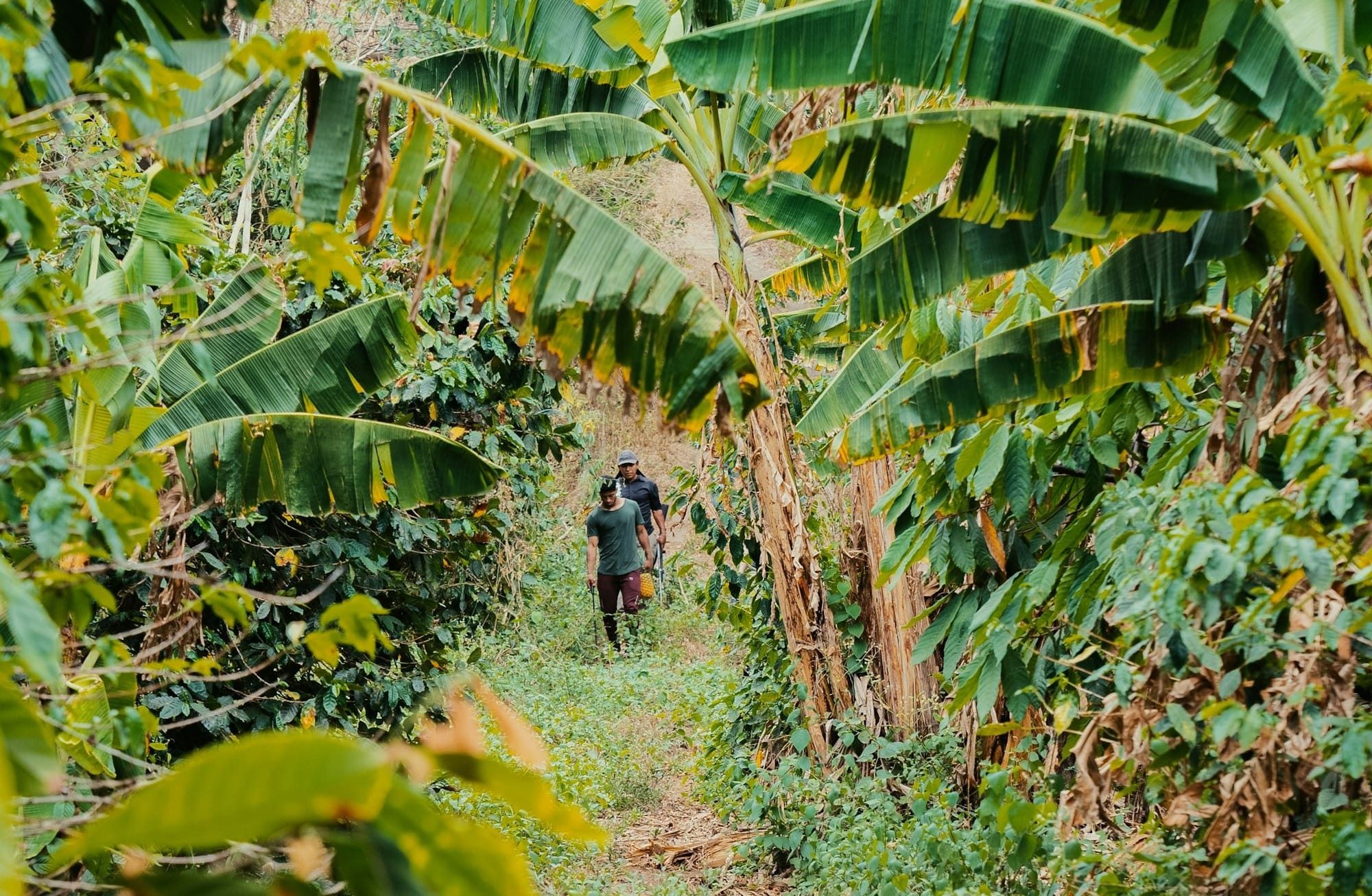
These are among Tanzania's native grasses, and Magreth Petro, a farmer and pastoralist, has been collecting and processing their seeds by hand since May.
Women "seed savers" are reviving traditional practices to restore native crops and pasturelands around the world, helping to sustain food security and livelihoods as climate pressures grow.
And Petro is one of them, working in Arkaria village in the Monduli Hills, about 22 miles (35 kilometers) west of Arusha, where one of the program sites for the Native Seeds Initiative's program sites is based.
"You see that these areas used to have grasses and plants, but they're almost completely bare now," Nai-nancy Laizer, who leads the initiative at Savannas Forever Tanzania, told CG. "The goal is for the [seed savers] to have good forage for their cattle but also earn income from selling the forage and native seeds. So it addresses the effects of climate but also generates income to these communities." Read more...
First male farmers, now girls and women found to be developing kidney disease associated with heat exposure
Higher rates of a chronic kidney disease once believed to be associated with occupational heat exposure among predominantly male farmers are now being observed in girls and women without this agricultural exposure.
A recent study published by Boston University researchers in the journal BMC Nephrology found increased rates of metabolic-associated kidney disease and chronic kidney disease of unknown origin — or CKDu — among girls and women in a region of Nicaragua.
CKDu was first identified in the region among young men doing manual labor in extreme heat, but new findings indicate there may be additional genetic and environmental factors that contribute to the prevalence of the disease, identified as a global health issue.
According to a university news release, "CKDu primarily occurs in Central America and South Asia [with] other hotspots in rural agricultural communities across the globe, from Africa to Thailand."
In a separate investigation, researchers are looking at the potential link between extreme heat exposure and CKDu cases among Mexican and Central American immigrants in Texas. Some experts there believe that heat exposure alone could contribute to the disease, while others say there may be additional factors, such as exposure to pesticides or heavy metals.
Women workers in India wear sensors in study on extreme heat
Early findings from a study aiming to track around 1,000 women wage workers point to significant economic losses, shortened sleep, and increased cardiac stress among the risks of extreme heat exposure.
Researchers at Harvard T.H. Chan School of Public Health are collaborating with the Self Employed Women's Association in India to measure the impacts of heat on women working in the country's informal economy — labor that includes garment work and street food vending.
The Community Heat Adaptation and Treatment Strategies — or CommHATS — study is measuring how heat and humidity affect participants' sleep, health, earnings, and overall well-being. Over 13 months, they will wear wrist sensors and use microsensors to measure heat and humidity at home and work, alongside health assessments and biomarker testing, to examine the impacts of heat exposure.
CommHATS offers a useful model for looking beyond heat exposure and mortality to capture the broader, less visible impacts of extreme heat. It also provides a way to test whether heat interventions are actually working. For example, is a cool roof effective if it lowers temperatures but still leaves someone unable to sleep comfortably? Could shortening daytime work hours and increasing work at night help reduce stress?
"The tool is … built for scale and can help communities anywhere in the world understand what their environmental exposure is at an actionable scale that is relevant to decision-making," Satchit Balsari, the study's principal investigator, recently wrote for Time Magazine. "It helps measure exposure as well as the efficacy of interventions."
Amid heavy dress, hormone care, and discrimination, Hijras suffer unequal burdens of heat
From ornate clothing to challenging health needs and social exclusion, Hijra women in South Asia are facing unequal burdens of the human-caused climate crisis.
This new reporting comes after brutal heat waves in recent months saw temperatures top 45 degrees Celsius (113 degrees Fahrenheit) in parts of India, and as the Climate Impact Lab at the University of Chicago estimates that the country will see 15,800 additional heat-related deaths between now and February, largely driven by this year's Super El Niño weather pattern.
Extreme temperatures can be especially punishing for those wearing intricate makeup and layered saris, and yet these outfits can be key to Hijras' earnings. Largely marginalized from the formal labor market but also believed to possess spiritual power, many in the community rely on panhandling under the hot sun as well as sex work, according to Behal.
"Begging is also a performance," one interviewee, anonymized as Fiza, told the reporter. "People believe we possess the power to bless, so appearance matters. We have to look the part."
Fiza also told Behal that taking her gender-affirming hormone medication — described by the journalist as "an important milestone" — increased her sensitivity to the heat.
Now, she told the journalist, moving ahead with gender-affirming surgery is urgent even though she has heard that recovery amid high temperatures can be difficult. A new law in India has made the surgery "the basis for obtaining legal recognition as male or female, replacing the earlier emphasis on self-identification," according to Behal, and " has made trans people more vulnerable to police questioning."
High school protests escalate in France as students challenge conditions, including indoor temperatures
High school protests have escalated across France and nearby Belgium since beginning in the Paris region last week. Students have been burning materials in the street, in some schools, and setting up blockades in a challenge to poor learning conditions.
As of Oct. 1, "900 blockades or related incidents" had been identified throughout the country, according to Agence France-Presse, and around 160 high schools had been closed. With university students now involved as well, access to at least 30 campuses has also been blocked.
The students are protesting a range of issues, including teacher shortages, overcrowding in schools, and crumbling infrastructure, such as ineffective cooling and heating systems.
"When it's hot, there's no air conditioning. And when it's cold, there's no heating," one 16-year-old told CNN, indicating an inability to concentrate amid the conditions.
According to the Guardian, around 3,000 students have been detained during the course of the protests. "More than 300 police and dozens of firefighters, teachers, and pupils have been injured," the news outlet reported on Oct. 1.
High school teacher Juliette Estiville told the Associated Press she attended the protests to help "provide protection, to form a barrier between the police and the students."
Following instructions from the Ministry of National Education, classes may be held remotely for schools where safety risks are assessed.
UK politician suggests companies should track and tackle misogyny, like emissions
British politician Bridget Phillipson, who has served as the Minister for Women and Equalities in the UK since 2024, has called on companies to take responsibility for addressing misogyny at the national level, similar to their corporate responsibilities for reducing harmful pollution.
"Businesses have responsibilities — rewarding workers, reducing emissions, respecting communities," Phillipson posted on social media on Sept. 26. "I'm calling on them to work with government in our national mission, using their power, influence, and resources to tackle the poison that is misogyny."
In her post, Phillipson appears to suggest that corporations ought to be responsible for tracking and reducing sexism, gender-based violence, wage gaps, and more, just as many have previously been required to track and reduce planet-warming fossil fuel emissions — though her call comes amid some notable rollbacks in such tracking requirements, such as under the second Trump administration in the U.S.
On Sept. 20, meanwhile, the UK government announced the launch of a "national taskforce to tackle the rise of misogyny" under Phillipson's direction.
"What we've seen over time is a normalization of attitudes toward women that I thought we'd put in the past," she said while speaking with The Times about the launch. "So this is about tackling the challenges we see, but also how we allow women to live lives where they don't have to worry, lives that they want to lead, with opportunity, with choice, with freedom."
Exposure to endocrine disruptors, pesticides, and air pollution could impact IVF success, says fertility specialist
Oladapo Ashiru, a long-time reproductive endocrinologist, is calling for preconception assessments of environmental toxin exposure, particularly for those pursuingassisted reproductive technologies, or ART, more commonly known as fertility treatments.
Ashiru made the recommendation at the recentannual conference of the African Federation of Fertility Societies and Association for Fertility and Reproductive Health in Abuja, Nigeria, according to Healthwise.
The endocrinologist and fertility specialist highlighted evidence linkingendocrine-disrupting chemicals, pesticides,heavy metals, air pollution, and workplace exposures to potential negative effects on sperm and egg quality, embryo development, and in vitro fertilization — or IVF — outcomes.
Ashiru also presented a detoxification approach for patients with a history of known toxic exposures or unexplained IVF failure. Overall, he called for greater attention to environmental and occupational exposures in preconception and fertility care, along with lifestyle and diet, encouraging patients to discuss the topic with their doctors.
"Toxins in our air, food, and everyday products can affect sperm and egg quality long before conception, yet they are rarely discussed in the fertility clinic," Ashiru said, per Healthwise.
Climate change could raise risks for Lassa fever, posing unique threats during pregnancy — but researchers may be able to predict outbreaks
Climate-driven increases in rainfall could raise the risk ofLassa fever by boosting populations of the rodents that carry the virus.
In a new study published in September in the journal Proceedings of the National Academy of Sciences — or PNAS — researchers found that wetter conditions increased rodent populations and that peaks in infected rodents tended to occur about a month before peaks in human cases.
The risks of human cases are particularly serious during pregnancy, "with over 80% of late-term infections" resulting in the death of the mother or baby, as reported by The Independent in its coverage of the study.
Lassa fever is endemic to West Africa, where an estimated 300,000 people are infected each year and 5,000 die. The virus is primarily transmitted from infected rodents to humans throughdirect or indirect contact with their urine or droppings, including through contaminated food or household items. The rodents involved in the spread are multimammate rats — also known as multimammate mice — according to the Centers for Disease Control and Prevention.
In this new study, researchers drew on 30 years of data to develop a model that accurately predicted the seasonal timing of outbreaks, offering a potential way to anticipate spikes and plan accordingly for prevention, monitoring, and treatment.
"Understanding how environmental change affects wildlife populations is essential for anticipating future zoonotic disease risks and could help scientists and public health authorities identify periods of heightened risk," lead author Gregory Milne told The Independent.
One goal at Climate, Gendered is to bring a spotlight to the reality that proliferating pollution, increasing temperatures, rising seas, extreme weather, habitat loss, and more can uniquely and disproportionately impact girls, women, and LGBTQ+ communities — especially individuals from communities of color, Indigenous people, disabled people, immigrants and displaced people, people experiencing poverty, and residents of low- and middle-income countries. We're also interested in the climate and environment crises and concerns that can disproportionately affect boys and men.
But there's a whole lot going on around the world, and this weekly brief isn't intended to be exhaustive but rather your chance to spend just a few moments on a handful of items — including the ideas that might make a difference.
This work cannot be done alone or in silos. We appreciate your feedback and observations. And please feel encouraged to share one way you noticed this week that climate and gender connect — and share CG with a friend.
"We know how much these women have trained, sacrificed, and prepared for this moment," Siana Austin Hunt of the O'ahu Hawaiian Canoe Racing Association said in a release regarding the race's cancellation, adding, "but the safety and well-being of our people and communities must come first."
"We are not simply providing aid," Nadine Ortega of the grassroots group Tagnawa Hawai'i told CG about supporting survivors of gender-based violence in the wake of hurricanes and floods. "We are supporting women's agency, autonomy, and ability to rebuild their lives on their own terms."
"Early hospital admission, close monitoring, timely access to blood when required, and appropriate fluid and supportive management are crucial to reducing dengue-related deaths among women," Dr. H.M. Nazmul Ahsan told The Daily Star.
"What will we do with pads if we don't have underwear?" Yogita Tamang asked AFP regarding a lack of period supplies in Nepal's relief camps. The U.N. has warned that risks of gender-based violence, sexual exploitation, and unmet reproductive health care needs have risen following last week's floods.