Researchers want the warming world to know there's more to the story than heat when it comes to climate impacts on pregnancy. "Whenever people can't conceive under the circumstances they'd choose, that's a reproductive autonomy concern," lead author Nina Brooks told CG about a new humidity study.
Researchers want the warming world to know there's more to the story than heat when it comes to climate impacts on pregnancy. "Whenever people can't conceive under the circumstances they'd choose, that's a reproductive autonomy concern," lead author Nina Brooks told CG about a new humidity study.
"There can be no climate justice without the freedom to demand it," Marta Schaaf of Amnesty International said in a statement in advance of COP31 kicking off this week in Turkey, where experts and advocates have raised concern over recent raids on LGBTQ+ communities.
Humid heat & conception, emergency grocery stores, Iowa bomb, monkey attack, El Niño births, women-led water, MP in Marie Claire, masculinity report, ideology straps COP & chem safety
Researchers want the warming world to know there's more to the story than heat when it comes to climate impacts on pregnancy. "Whenever people can't conceive under the circumstances they'd choose, that's a reproductive autonomy concern," lead author Nina Brooks told CG about a new humidity study.
But to date, less mainstream attention seems to have been paid to the potential pregnancy impacts of another dimension of the climate crisis: humidity — or the measure of water vapor in the air.
Warmer air can hold more moisture, so increasing humidity is a growing problem as days and nights heat up. Higher humidity can also lower humans' resilience to hot weather, making it harder to cool off and raising comfort and safety concerns — concerns that are likely to sound familiar to anyone who has traveled from dry-hot to wet-hot conditions and noticed difficulty adjusting to the latter.
And what if you step off that plane into wet, heavy, muggy air as a pregnant person?
"Whenever people can't conceive under the circumstances they'd choose, that's a reproductive autonomy concern," study co-author Nina Brooks told CG. "That's why timely, accurate information about the pregnancy risks of humid heat matters, both for population health and for reproductive rights." Read more...
IN THE NEWS
➡️
Update - Ebola outbreak impacts on women and girls in DRC: According to a press release from the International Rescue Committee, gendered impacts of the past six months of the Ebola outbreak in the Democratic Republic of the Congo have included growing exposure to gender-based violence and exploitation, distrust of treatment centers spreading to seeking maternity health care services, and fear of farming alone or in groups, intensifying food insecurity. Earlier this year, CG also covered exposure risks tied tocaregiving and new potentialtreatments of the Bundibugyo strain of the Ebola virus.
➡️
Update - Proposal could loosen protections for miners: CG has previously looked at efforts to amend workplace silica dust testing policies in the U.S. that could weaken coal miners' protections against black lung disease, an incurable but preventable disease which has been documented in younger and younger workers, most often men. Now, workers and advocates are concerned that a new proposal from the Mine Safety and Health Administration could give mines more discretion over monitoring their own toxic dust. The proposed rule is set to be open for public comment for a period of up to 60 days after posting.
➡️
Update - Call to vote on DEFIANCE Act: On Tuesday, public figure Paris Hilton returned to Washington, D.C. to ask Congress to vote on the bipartisan-backed DEFIANCE Act, which the Senate unanimously approved in January. If passed and signed into law, the bill would enable victims of nonconsensual, artificial intelligence-generated pornography to sue and seek damages from individuals who produce, distribute, receive, or possess the sexually explicit — and energy-intensive — digital content.
Ideological resistance to "gender" at COP31 and chemical safety conference
At two U.N. conferences this past week, a small number of stakeholders allegedly moved to block references to "gender" from discussions and frameworks aimed at coordinating climate action and tackling toxic chemicals.
Politico reported on Nov. 18 that four anonymous diplomats had identified the Vatican and Russia as two global powers working to "block references to gender recognition in talks" at the U.N. Climate Change Conference — also known as COP31 — in Antalya, Turkey.
"It seems to be part of a broader anti-gender backlash," one diplomat told the news outlet. The same individual also said, "They want to replace the word 'gender' with' 'women,' and not even accept a reference to 'all women' but only 'women.'"
The anonymous sources told Politico they thought the resistance was fueled by objections to LGBTQ+ rights and inclusion of transgender people.
References to "gender" have been key to climate talks and texts aimed at addressing the disproportionate effects of extreme weather on women, girls, and LGBTQ+ people.
Discussions about how to address the unique impacts of toxic chemicals on the same groups reportedly faced similar opposition this week at the first conference of the Global Framework on Chemicals in Geneva, Switzerland.
According to Health Policy Watch, a delegation from the U.S. led a group including Argentina, Russia, and Saudi Arabia to block a proposed chemicals-and-waste-specific Gender Action Plan at the U.N. summit. The agency described the summit as supporting "a Planet Free of Harm from Chemicals and Waste."
Of the more than 100 governments represented in Geneva, the four objecting countries allegedly did not want to include any terminology related to gender.
Health Policy Watch noted that "Washington demanded replacing gender references with binary biological sex categories, refusing to join consensus on the proposed gender action plan."
Without consensus, the acting conference president reportedly moved discussion to an ad hoc informal group, leaving the fate of the chemicals-and-waste-specific Gender Action Plan in some question as both summits wound down amidvariousfrustrations.
Challenging harmful views of masculinity could protect the planet in more ways than one, report says
A new global report calls on governments and policymakers to tackle the overlooked impacts of patriarchal social norms and systems considered to be at the root of human-induced climate change and environmental degradation.
"There is now a significant body of research from across the globe which demonstrates that restrictive ideas about masculinity are leading to men playing a disproportionate role in ecological destruction," co-author Stephen Burrell said in a press release. "This is bad for people and the planet alike, including for men ourselves."
The authors advocate for approaching the topic with an intersectional lens, writing in the report that "some men bear more responsibility than others, particularly those who are in the Minority World, white, wealthy, and in positions of power."
"Many men and boys are deeply concerned about climate and gender justice — and there are organizations around the world supporting them to embrace care for nature, in collaboration with feminist movements," Burrell said in the release. "But they desperately need help from policymakers (especially men in positions of power!) to recognize the seriousness of the climate crisis and address the harmful gender norms and social inequalities at its roots."
Amid outcry from the public and politicians, U.S. Army postpones planned detonation of lead explosives in Iowa
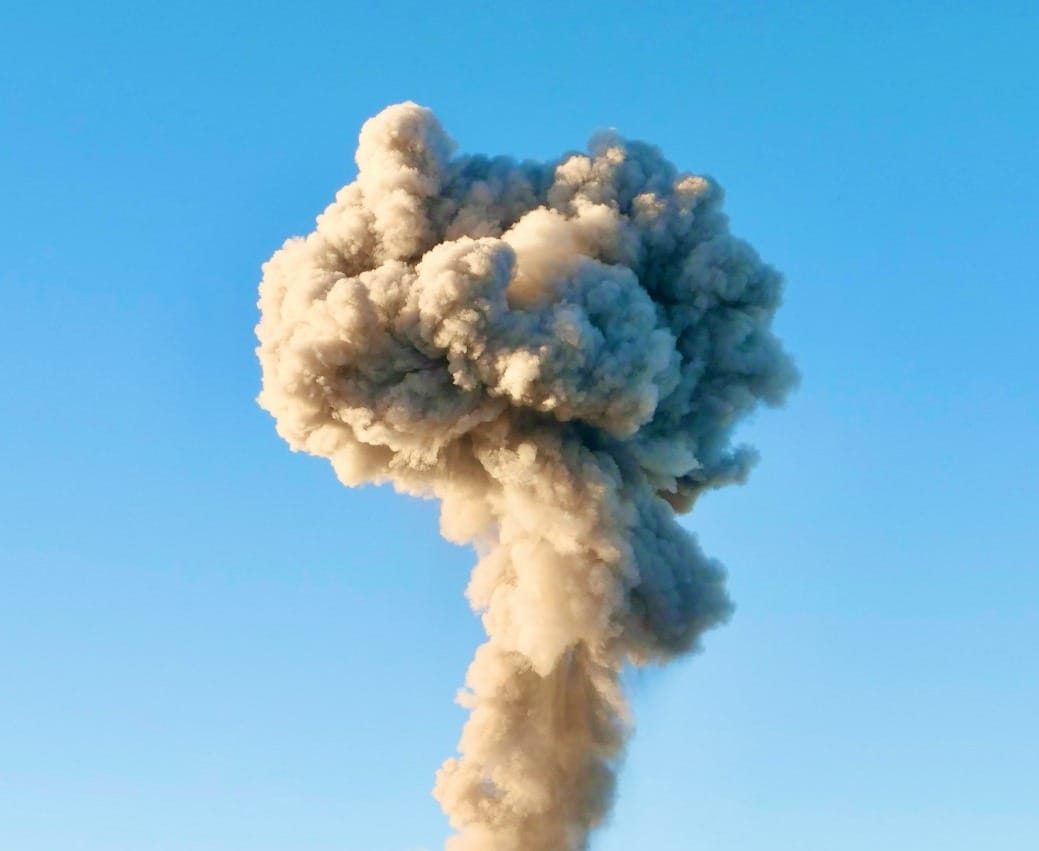
After discovering degraded munitions at the Iowa Army Ammunition Plant earlier this year, the U.S. Army had planned a controlled detonation for Friday, Nov. 20. A federal appeals court has since blocked the scheduled explosion pending review of the emergency permit that authorized the Army's intended action.
Too sensitive to be safely handled or moved, military officials had previously determined that the 68 drums of lead azide would need to be detonated on site in Middletown, Iowa.
In a public advisory, the Army announced that residents would be "asked to vacate the area from 8 a.m. to 2 p.m.," with lead-containing dust expected to linger for around an hour after the noontime explosion.
Meanwhile, residents, academics, and politicians raised concerns that the neurotoxic heavy metal could linger much longer on surfaces and in soil, potentially affecting human health and habitats.
In babies and children, long-term exposure to lead is linked to brain and nervous system damage, learning and behavior problems, and hearing and speech issues. Lead exposure in pregnant or lactating people can mean the metal passes from a parent to a fetus through the placenta or to an infant through breast milk. Health risks also exist for adults.
Amid concerns and public outcry, Earthjustice, on behalf of the Iowa Environmental Council and the Sierra Club Iowa Chapter, sued to stop the planned detonation in Middletown, according to a press release.
Politicians, including Gov.-elect Rob Sand, also called for the Army to delay its plan, characterizing communication with residents as lacking and "unacceptable." On social media, some community members said they had known about the plan for months — something the Army has also suggested — while other residents said they had just heard about it this week.
On Thursday evening, Acting Army Sec. Adam Telle posted an announcement that the detonation would be postponed until Monday, Nov. 23.
Friday morning, a joint statement from the Department of the Army, Department of Health and Human Services, and EPA confirmed the delay.
As of 9 p.m. ET on Friday, the latest from the Associated Press was that the 8th U.S. Circuit Court of Appeals had not yet issued a schedule for when it would rule on the permit stay, but attorneys said they expected a ruling to come before the rescheduled Monday detonation.
Birth will be deadlier under "Super" El Niño, midwives warn
Millions of people living in vulnerable regions are more likely to die in childbirth this year, according to the International Confederation of Midwives.
"El Niño is coming on top of other health risks — and for many this will become the difference between life and death," Anna af Ugglas, the organization's CEO, told the Guardian.
The news outlet reported that 15 million births are expected in high-risk countries in November and December.
Pregnant people navigating social and economic inequality in areas already impacted by rising temperatures and extreme weather are most at risk. Scientists generally agree that this year's naturally occurring "Super" El Niño weather pattern will exacerbate conditions already driven by the human-induced climate crisis, including heat-related illness, power grid instability, and storms that stymie health care access.
"What stays with me is how quickly reaching a hospital can become uncertain. I can't help thinking about a pregnant woman going into labor in an isolated community, or a newborn requiring urgent care when roads are blocked," Natalia Acha Godoy, of the Maternity Foundation, told the Guardian.
Women are preparing for El Niño-worsened drought in Zimbabwe
Women in Mbire, Zimbabwe, are leading efforts to establish water security and mitigate disaster ahead of a potentially catastrophic drought season.
They're stepping into leadership roles on community committees designed to manage water use, protect livestock, and strengthen household resilience ahead of imminent Super El Niño-influenced conditions.
The committees have been developed as part of the Water and Agriculture Humanitarian Anticipatory Action program, led by aid agency Welthungerhilfe. The effort aims to support roughly 15,000 households throughout the Mbire, Mt. Darwin, and Rushinga districts in northern Zimbabwe.
"As women, we understand the challenges of looking for water, caring for children, and keeping households going when resources are scarce," program participant Sharon Chiutsi told regional news outlet 263Chat. "When we are represented in leadership, we can explain these realities and help make decisions that respond to our needs."
Australian MP pens piece for Marie Claire: "Good climate policy can't be developed without the people most affected by it"
An Australian politician published a new piece this week in her country's edition of Marie Claire, highlighting the unique threats women face amid climate disasters and the vital role they play in navigating them.
"When communities are displaced, it is women doing the work of keeping families together, organizing support, and caring for those who need it," wrote Zali Steggall, a Member of Parliament representing Warringah.
Steggall pointed to some of the disasters that have impacted Australia in recent years, from destructive bushfires to the 2022 Northern Rivers floods.
"Men were rightly recognized for carrying out rescues [during the floods]. But research shows women also played an essential role, organizing impromptu evacuation centers, preparing meals, providing emotional support, and obtaining essential medications. Much of this work went largely unrecognized," she explained.
First Nations women are also stewarding fragile ecosystems and generational knowledge about local habits, Steggall said. But she and others are concerned about how little all of these and other efforts are translating into decision-making roles.
Australia was chosen to lead negotiations at COP31. Now, Australians — from politicians to academics to advocates — are calling on their government to lead on better integration of gender into climate adaptation at home.
"Since being elected to federal parliament in 2019, I have fought for real action on climate change, and for an Australia better prepared for the warming locked in," Steggall wrote. "I have consulted with women from all walks of life, and I know that good climate policy can't be developed without the people most affected by it."
Monkey attacks at Indian flats raise safety concerns
One woman's morning walk through a residential complex in Western India was brutally interrupted by a monkey attack and multiple bites.
Left wounded, the Free Press Journal reported that people nearby the Infinium Flats in Vadodara's Chhani Jakatnaka area heard the woman's cries and came to her aid before she was transported to a health facility.
However, the monkey in question was not captured until days later, according to the news outlet. In the meantime, what was identified as closed-circuit television footage of the human-wildlife encounter was shared on social media, where it raised alarm.
Similar incidents have been reported at the complex before. "However, the latest attack has intensified fears about the safety of people living in the premises, particularly women, children, and senior citizens," according to the Free Press Journal.
Of course, men can and do face risks from human-wildlife encounters — which can be dangerous for people and animals and have increased due to habitat changes that have pushed the two into closer proximity.
At the Infinium Flats, recent human-wildlife encounters may reflect another gendered threat. As climate shifts and deforestation lead animals to move into residential areas undefended against wildlife, those often caring for and in domestic spaces may face risks of attack and zoonotic disease.
According to the Free Press Journal, the recent attack in Vadodara has "brought attention to the need for timely intervention by authorities to … prevent such attacks in residential complexes."
Plans in Denmark could mean dozens of emergency grocery stores are able to operate even if the grid goes down
Access to essentials could see a major upgrade in Denmark, where a retail giant is working to establish dozens of "emergency" grocery stores to ensure that residents can obtain groceries even during disasters.
According to the Copenhagen Post, the conglomerate Salling Group — which operates the chains Bilka, Føtex, and Netto — is moving forward with creating 51 stores designed to operate without relying on the electrical grid or external communication in the event of major disruptions to critical infrastructure.
The supermarkets will reportedly include staple foods like canned goods, oatmeal, protein bars, and beans, as well as supplies like batteries, diapers, and wet wipes, selected in accordance with Danish authorities' recommendations for preparedness. Per the Post, Salling Group has said the goal is to establish these stores within about 30 miles (50 kilometers) of up to 80% of the Danish population.
The supermarket sector in the Netherlands may also be looking to reduce travel distance to stores and increase resilience to grid disruptions. These efforts come as multiple European countries have seen grocery stores hit by cyberattacks, such as those that have hacked refrigeration systems to heat up and spoil tons of food.
The BBC reported this week that a "secret nationwide operation" had been launched to protect U.K. supermarkets from these attacks. Meanwhile, the hacking events may have given the sector just another reason to improve resilience to all kinds of grid-down disasters that could make it difficult for populations to access enough food, water, and critical supplies.
Europe has experienced record heat waves in recent years while scientists have continued to track droughts, floods, and other climate disasters that have disrupted agricultural production and global supply chains.
One goal at Climate, Gendered is to bring a spotlight to the reality that proliferating pollution, increasing temperatures, rising seas, extreme weather, habitat loss, and more can uniquely and disproportionately impact girls, women, and LGBTQ+ communities — especially individuals from communities of color, Indigenous people, disabled people, immigrants and displaced people, people experiencing poverty, and residents of low- and middle-income countries. We're also interested in the climate and environment crises and concerns that can disproportionately affect boys and men.
But there's a whole lot going on around the world, and this weekly brief isn't intended to be exhaustive but rather your chance to spend just a few moments on a handful of items — including the ideas that might make a difference. We appreciate your feedback and observations.
"There can be no climate justice without the freedom to demand it," Marta Schaaf of Amnesty International said in a statement in advance of COP31 kicking off this week in Turkey, where experts and advocates have raised concern over recent raids on LGBTQ+ communities.
"She said that in Nepal, people see them with that same limited perspective. They see them as Kinnar women with powers or as sex workers, but they don’t see them as whole human beings," said Abinash Bikram Shah, director of Elephants in the Fog, on how a Kinnar mother inspired the film.
"Communities that are most affected by climate change are showing the world how to adapt," Bijal Brahmbhatt of Earthshot Prize finalist Mahila Housing Trust said in a short video recently shared on social media.
"He who destroyed the forests sleeps in air-conditioned rooms. He who toiled the soil wraps himself in a damp cloth." These are among the lyrics of the Sollisai Sistahs, an all-women rap group from Tamil Nadu featured on the new Climate Emergency Mixtape.