"The goal is for the [seed savers] to have good forage for their cattle but also earn income from selling the forage and native seeds," Nai-nancy Laizer of Savannas Forever Tanzania told CG. "So it addresses the effects of climate but also generates income to these communities."
"The goal is for the [seed savers] to have good forage for their cattle but also earn income from selling the forage and native seeds," Nai-nancy Laizer of Savannas Forever Tanzania told CG. "So it addresses the effects of climate but also generates income to these communities."
"We know how much these women have trained, sacrificed, and prepared for this moment," Siana Austin Hunt of the O'ahu Hawaiian Canoe Racing Association said in a release regarding the race's cancellation, adding, "but the safety and well-being of our people and communities must come first."
Have you heard of "clean air clubs"? Grassroots organizers are sharing this guide so communities can start their own and neighbors can help keep each other safe amid wildfires and pollution.
What's a "clean air club"? It could be your community's answer to wildfire smoke
As wildfire smoke increasingly affects communities across the U.S.,grassroots groups are filling gaps in public health protections by making sure that clean-air resources such as masks and air purifiers reach their neighbors.
According to the Guardian, many of these groups grew out of COVID-era mutual aid efforts and are now adapting to address worsening wildfire smoke. Organizers say they can respond faster than government systems in many cases because they face less bureaucracy, while also reaching those particularly vulnerable to poor air quality, including younger children, older adults,pregnant people, outdoor workers, and those with heart and lung conditions.
A reported 40 clean air clubs exist globally, and organizers have developed a guide for starting your own. The thinking shares some common ground with community-based air quality monitoring programs that have been implemented to collect local air pollution data.
Responding to Puerto Rico water crisis, some experts say rainwater harvesting could help
Local architect Fernando Abruña told reporter Yessenia Funes at WIRED that if 1 million households on the island adopted rainwater-harvesting systems, they could collect about 30 billion gallons of water annually. The water could be usable for activities such as flushing toilets and watering yards, thereby prioritizing clean water for drinking, cooking, and washing.
Historically and around the world, women and girls have often borne the burden of gathering and managing household water supplies, with collection duties sometimes taking time away from school, career, and recreation as well as posing health and safety risks in transit to collection sites. Implementing safe rainwater harvesting systems closer to home could help.
Farah Nibbs, an assistant professor specializing in emergency disasters and health systems, told Funes that governments should see rainwater "as part of the national water supply." According to WIRED, the U.S. Virgin Islands and Barbados already require some form of rainwater collection. In Mexico, women have developed similar grassroots systems to help navigate water scarcity.
More than 2K people have died of Ebola in the DRC, officials report
Last week, the Democratic Republic of Congo said that the ongoing Ebola outbreak has killed over 2,000 people in the country. According to the Guardian, the death toll of at least 2,325 people now qualifies this outbreak as the DRC's deadliest.
The current outbreak involves the Bundibugyo strain of the virus, for which there are not yet any specifically approved treatments or vaccines. Clinical trials are ongoing to evaluate two therapies and a vaccine for the Bundibugyo strain. Meanwhile, the DRC is set to receive 70,000 doses of a vaccine approved for the Zaire strain.
Some experts have questioned whether the move could give a false sense of security or erode trust if the Zaire vaccine doesn't work well. Still, WHO has celebrated the dispersal of a potential tool amid a record-breaking outbreak, one that Reuters has reported "shows no sign of slowing."
From a gendered perspective, effective treatment and prevention could help to reduce the caregiving responsibilities that are often borne by women and girls and that can increase exposure risks. Such tools could also help to mitigate the gender-based violence that may rise amid outbreaks of climate-exacerbated infectious diseases like Ebola.
In Sudan, seasonal floods have combined with ongoing conflict to displace more than 200K
This week, the U.N.'s International Organization for Migration reported that an additional 200,000 people have been displaced in Sudan amid seasonal floods and ongoing conflict. The agency says that a total of 8.6 million people are currently displaced within the country. The compounding risks of floods and fighting have previously been linked to gender-based violence, sexual exploitation, and child marriage in both Sudan and nearby South Sudan.
Critical minerals mining could raise child marriage and violence risks, researcher says
The expansion of critical minerals mining may be contributing to child marriage risks and the risks of gender-based violence in Southern Africa, according to ecofeminist scholar Melania Chiponda.
Those working in humanitarian spaces have long understood that climate shocks, such as floods and droughts, can raise the risks of child marriage, primarily by stressing household finances. Now, Chiponda is highlighting that mining operations intended to extract minerals such as lithium and cobalt could be contributing to those hazards. The minerals are key to various technologies, including clean-energy tech like electric vehicle batteries.
Speaking at the 2026 Southern African Development Community People's Summit this month, Chiponda said critical minerals mining can deepen community vulnerabilities by displacing populations, taking over agricultural lands, and disrupting local economies.
Covering Chiponda's presentation, Africa Science News also reported that "mining boomtowns may also create environments where transactional sex, early marriage, and exploitation become more common."
The phenomenon could be said to echo links between oil, gas, and mining workforces in North America and gender-based violence disproportionately harming Indigenous women and girls there. This year, one Alaska community has reportedly stood up a Native-led sexual assault response team in preparation for a new gold mining operation.
In Southern Africa, Chiponda called for stronger corporate accountability, gender-responsive community engagement, protections for displaced communities, and greater integration of child protections into climate and just transition policies.
Workers in India are trying heat insurance, identifying some gaps
Shabnam, a tailor working in northern India, told DW that there have been periods of intense heat when she can't use a fan because it ruffles the fabric she's sewing.
It's an example of why, for the past several years, the country's Self-Employed Women's Association has offered a parametric heat insurance program to help participants offset the income losses linked to heat waves, which can compromise health, productivity, and earnings.
The insurance program — designed to be affordable and currently serving over 200,000 women — sets a threshold temperature beyond which extreme heat can trigger payouts to help support informal sector workers, who are disproportionately impacted by high temperatures, both physically and financially.
However, some analysts have identified potential gaps in such climate insurance plans involving what they can and can't cover.
"The parametric insurance will not be able to differentiate," Abhishek Jain of the Council on Energy, Environment, and Water told DW. "A 55-year-old woman working on a farm with the same ambient temperature will have a very different impact on her productivity and how she is feeling vs. an 18-year-old boy on the next farm."
Still, tailor Shabnam told DW that the insurance program has made a difference for her and her family, even helping to keep her daughters in school.
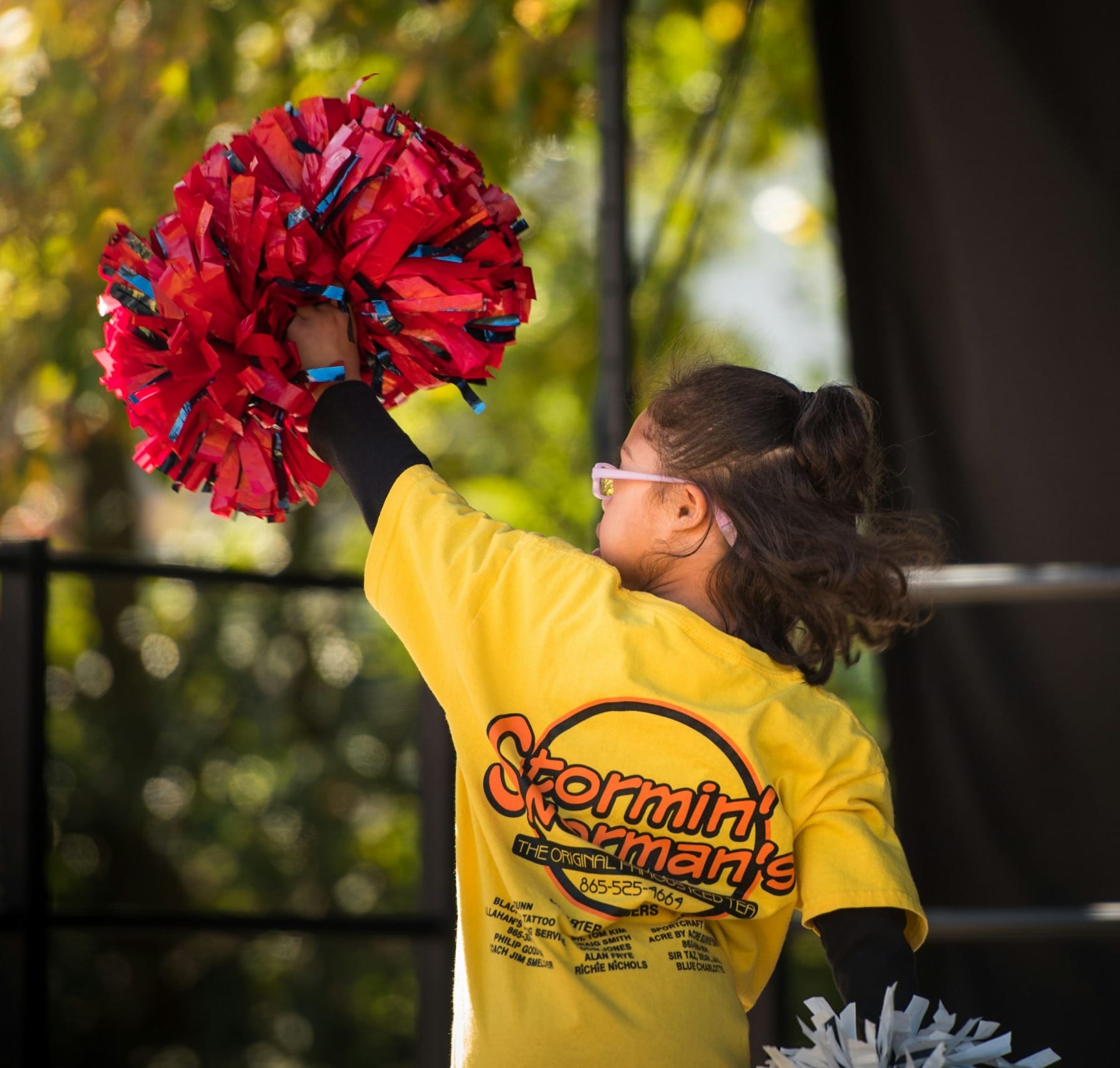
Florida cheer and dance program aiming for nonprofit status, with hopes of moving indoors and mitigating heat stress
Staff at Pure Pressure Cheer and Dance in Orlando, Florida, say their young participants have gotten better grades and gained confidence since joining the program. But some of the girls have also been affected by high temperatures while exercising outdoors.
"They pass out," Assistant Director Martavia Brown told local outlet News 6. "It has been very difficult."
The concern is one reason that Pure Pressure is working to achieve nonprofit status. The staff hopes this could help the program secure funds to buy or rent a building so that practices can take place indoors and out of the heat.
For now, the girls have been asked to take breaks in their families' cars, parked nearby. A more permanent solution could help support youth health and sustain operations amid rising temperatures, improving the climate resilience of a program that means a lot to community members.
"Everybody doesn't have this opportunity right in their community. You might have to go somewhere else," 12-year-old Tija Dansey told the local news. "You can just be you here."
Hundreds of California stoneworkers, mostly Latino men, diagnosed with deadly silicosis in recent years
A report published this month in Public Health Alerts identified nearly 600 cases of silicosis among workers creating artificial stone countertops in California. According to the Centers for Disease Control and Prevention, "exposure to respirable crystalline silica can lead to permanent lung damage called silicosis," which is "a progressive, debilitating, and sometimes fatal disease" that can also "cause other serious diseases, including lung cancer, chronic obstructive pulmonary disease, certain autoimmune diseases, and chronic renal failure."
Of the 592 cases documented in California from 2019 to 2026, all but one were diagnosed in men, and 98% were in Latino workers. Their occupational exposures ranged from 16 to 25 years. Globally, most cases of silicosis have been diagnosed in men, with higher death rates in people of color.
The Los Angeles Times reported that the Western Occupational & Environmental Medical Association has argued for bans similar to those in Australia on the production and fabrication of engineered stone containing crystalline silica, commonly known as engineered quartz. Supporting alternative countertop products could also help to shift consumer demand without impacting stoneworker employment.
Report co-author David Michaels told the newspaper, "It's become clear that this product, engineered stone countertops ... cannot be manufactured safely and economically." Michaels continued, "This is a product that we do not need that is damaging the lungs of hundreds of workers [in California] and probably thousands of workers across the country."
One goal at Climate, Gendered is to bring a spotlight to the reality that proliferating pollution, increasing temperatures, rising seas, extreme weather, habitat loss, and more can uniquely and disproportionately impact girls, women, and LGBTQ+ communities — especially individuals from communities of color, Indigenous people, disabled people, immigrants and displaced people, people experiencing poverty, and residents of low- and middle-income countries. We're also interested in the climate and environment crises and concerns that can disproportionately affect boys and men.
But there's a whole lot going on around the world, and this weekly brief isn't intended to be exhaustive but rather your chance to spend just a few moments on a handful of items — including the ideas that might make a difference.
This work cannot be done alone or in silos. We appreciate your feedback and observations. And please feel encouraged to share one way you noticed this week that climate and gender connect — and share CG with a friend.
"The goal is for the [seed savers] to have good forage for their cattle but also earn income from selling the forage and native seeds," Nai-nancy Laizer of Savannas Forever Tanzania told CG. "So it addresses the effects of climate but also generates income to these communities."
"We know how much these women have trained, sacrificed, and prepared for this moment," Siana Austin Hunt of the O'ahu Hawaiian Canoe Racing Association said in a release regarding the race's cancellation, adding, "but the safety and well-being of our people and communities must come first."
"We are not simply providing aid," Nadine Ortega of the grassroots group Tagnawa Hawai'i told CG about supporting survivors of gender-based violence in the wake of hurricanes and floods. "We are supporting women's agency, autonomy, and ability to rebuild their lives on their own terms."
"Early hospital admission, close monitoring, timely access to blood when required, and appropriate fluid and supportive management are crucial to reducing dengue-related deaths among women," Dr. H.M. Nazmul Ahsan told The Daily Star.