"We are not simply providing aid," Nadine Ortega of the grassroots group Tagnawa Hawai'i told CG about supporting survivors of gender-based violence in the wake of hurricanes and floods. "We are supporting women's agency, autonomy, and ability to rebuild their lives on their own terms."
CG spoke with advocates in Washington State and Hawai'i about the unique impacts of wildfires and floods on DV survivors and what's needed to stand up for them — from personalized solutions to direct cash assistance and the integration of violence prevention into every layer of emergency response.
"Early hospital admission, close monitoring, timely access to blood when required, and appropriate fluid and supportive management are crucial to reducing dengue-related deaths among women," Dr. H.M. Nazmul Ahsan told The Daily Star.
"Being a female photographer … gets me into more places," the future of OTC abortion care, new CA bill puts lens on climate & gender
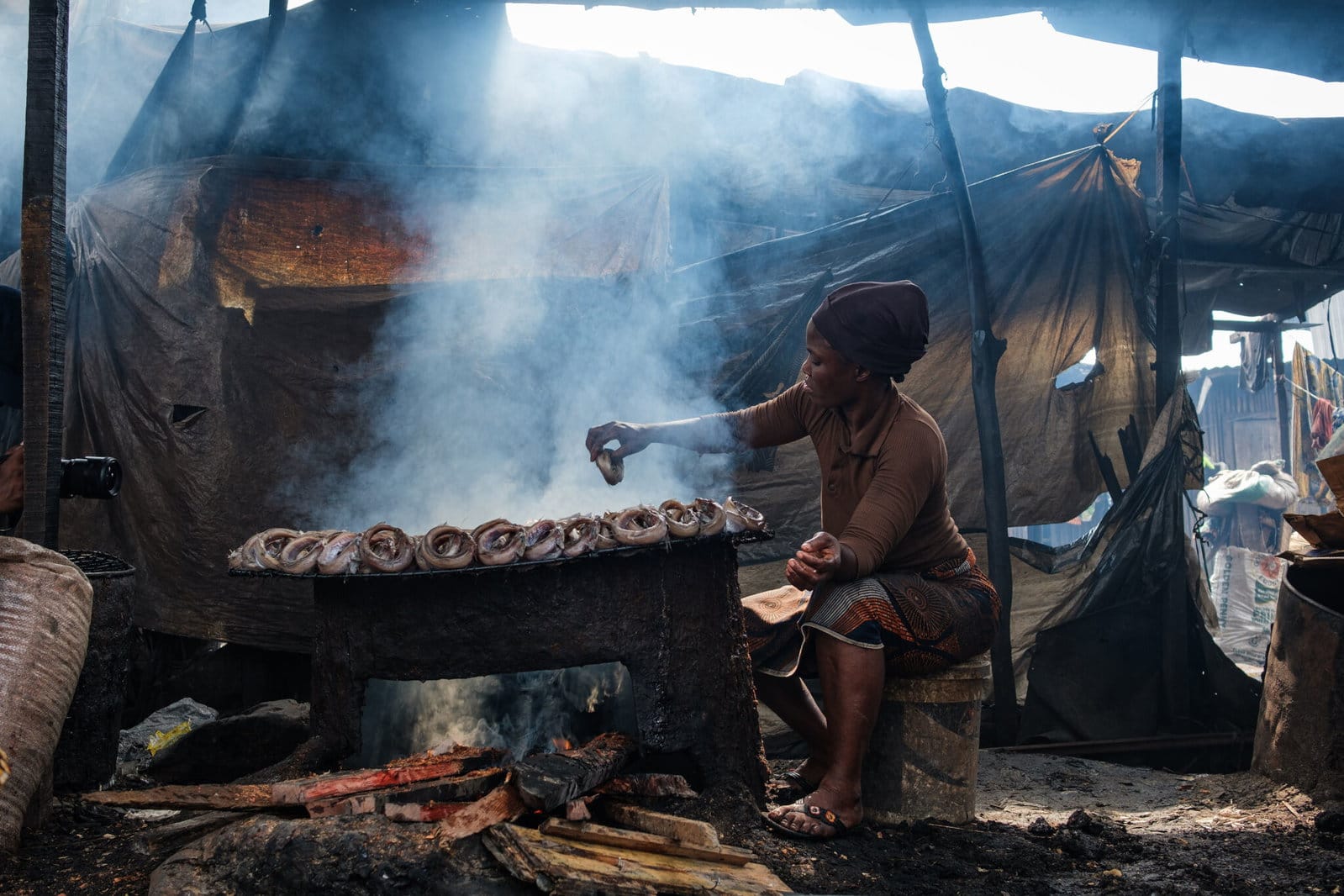
"Everywhere is blacked out," photographer Taiwo Aina-Adeokun told CG about the smoky, sooty conditions she observed in kitchen settings — spaces to which her identity as a female photojournalist helped gain her access, she said. "At the fish smoking area, her eyes were always watery."
Researchers, U.N. point to more gendered impacts of Ebola outbreak
Last month, researcher Lindsay Stark told CG about new findings that show global outbreaks — including those exacerbated by climate shifts and land use change — may increase the risks of gender-based violence, or GBV. Last week, Stark appeared on WBUR's Here & Now to discuss the research amid the ongoing Ebola outbreak in Uganda and the Democratic Republic of the Congo.
While the outbreak remains a major concern, the World Health Organization and the Centers for Disease Control and Prevention have downsized their estimations of suspected Ebola deaths in the region. As of June 4, the CDC noted fewer than 70 confirmed deaths.
U.N. Women released a statement in late May underscoring concerns that the effects of this outbreak may be disproportionately felt by women, who are often overrepresented in administering care for sick family and community members, increasing risks of infection. The agency also pointed to the potential for increased risks of GBV. Read more...
Pattie Gonia reacts to trademark lawsuit filed by outdoor clothing brand Patagonia
In December, CG covered the efforts of drag artist and environmental activist Pattie Gonia to hike 100 miles and raise more than $1 million in support of equitable access to nature. Last week, the popular performer shared a video on social media, publicly addressing the lawsuit that the billion-dollar outdoor apparel brand Patagonia has filed against them.
The performer, whose non-performance name is Wyn Wiley, created the drag persona back in 2018. Wiley filed a trademark application in September 2025 to use "Pattie Gonia" in association with clothing and activism. Patagonia, long positioned as an environmentally forward brand, sued Wiley for trademark infringement in January. Read more...
"Being a female photographer … gets me into more places": How one photojournalist documented community dangers of black carbon and oil pollution in Nigeria
In one of the photos from a new collection documenting the impacts of crude oil and black carbon pollution — or soot — in Nigerian communities, viewers can see 40-year-old Anthonia Akonasu perched over the fish she is smoking to sell in the Makoko settlement in Lagos. The photo's caption says that smoking fish has been Akonasu's main source of income for nearly 15 years.
That duration points to how long Akonasu, who is married to a fisherman and has six children, may have been exposed to soot-laden air and surfaces.
"Everywhere is blacked out," photographer Taiwo Aina-Adeokun told CG via Zoom about the smoky conditions she observed in kitchen settings — spaces to which her identity as a female photojournalist helped gain her access, she said. "At the fish smoking area, her eyes were always watery."
In 2025 and 2026, Aina-Adeokun documented the effects of black carbon and crude oil pollution across Lagos and Rivers States. Read more...
New research points to a potential future for over-the-counter abortion medication — among other things, it could strengthen the climate-resilience of reproductive care
A month before the ruling from the 5th U.S. Circuit Court of Appeals that temporarily blocked legal access to the provision of mifepristone via telemedicine, mail delivery, and pharmacy dispensing this spring, a new publication gestured toward a future when abortion pills might be accessible over the counter.
"[Over-the-counter] medication abortion has the potential to improve access to abortion care in the U.S., as well as in other countries where the medications are not currently available over the counter," Kari White, a co-author of the study and the Executive and Scientific Director at the Texas-based Resound Research for Reproductive Health, told CG.
The study, published in April in the journal JAMA Internal Medicine, indicated that medication abortion facilitated by mifepristone and misoprostol — two drugs that can be used to end a pregnancy — "likely meets the U.S. Food and Drug Administration criteria for over-the-counter sale."
Now, that's far from decreeing the medications officially approved for over-the-counter, or OTC, status and non-prescription sales at pharmacies, supermarkets, and convenience stores. But it could be a step toward improving reproductive autonomy — and the resilience of reproductive care to the intensifying extreme weather events that can disrupt access.
Hear more from four of the study's co-authors and leaders in sexual and reproductive health and rights — including a personal story from Emma Hernández of We Testify. Read more...
California lawmaker introduces bill that would require gender to be considered in planning for climate emergencies
Accounting for the needs and contributions of women, girls, and gender-diverse people has beenlargely absent from state-level climate emergency planning and strategies in the U.S. Now, California Senate Bill 10 — or SB 10 — seeks to change that.
The bill, introduced by State Senator Steve Padilla of San Diego last month, aims to strengthen emergency preparedness and protections for vulnerable communities by explicitly accounting for and providing guidance on how climate shocks and extreme weather events can affect different groups, including women, girls, and LGBTQ+ people. Read more...
One goal at Climate, Gendered is to bring a spotlight to the reality that proliferating pollution, increasing temperatures, rising seas, extreme weather, habitat loss, and more can uniquely and disproportionately impact girls, women, trans communities, and nonbinary people — especially those from communities of color, Indigenous people, disabled people, immigrants and displaced people, people experiencing poverty, and residents of low- and middle-income countries. We're also interested in the climate crises and concerns that can disproportionately affect men and boys.
This work cannot be done alone or in silos. We appreciate your feedback and observations. And please feel encouraged to share one way you noticed this week that climate and gender connect — and share CG with a friend.
"We are not simply providing aid," Nadine Ortega of the grassroots group Tagnawa Hawai'i told CG about supporting survivors of gender-based violence in the wake of hurricanes and floods. "We are supporting women's agency, autonomy, and ability to rebuild their lives on their own terms."
"Early hospital admission, close monitoring, timely access to blood when required, and appropriate fluid and supportive management are crucial to reducing dengue-related deaths among women," Dr. H.M. Nazmul Ahsan told The Daily Star.
"What will we do with pads if we don't have underwear?" Yogita Tamang asked AFP regarding a lack of period supplies in Nepal's relief camps. The U.N. has warned that risks of gender-based violence, sexual exploitation, and unmet reproductive health care needs have risen following last week's floods.
Have you heard of "clean air clubs"? Grassroots organizers are sharing this guide so communities can start their own and neighbors can help keep each other safe amid wildfires and pollution.