"In Zimbabwe, contraceptive pills were being sold by staff to buy food during the drought. In drought-affected communities, 54% of girls and young women had seen more unintended pregnancy, against 29% elsewhere," Reena Ghelani, CEO of Plan International, told CG.
A new report points to floods, droughts, storms, and extreme heat as risk factors for gender-based violence, child marriage, and unintended pregnancy among girls and young women in low- and middle-income countries. Plan Intnl. CEO Reena Ghelani has a message for those in high-income countries too.
"The goal is for the [seed savers] to have good forage for their cattle but also earn income from selling the forage and native seeds," Nai-nancy Laizer of Savannas Forever Tanzania told CG. "So it addresses the effects of climate but also generates income to these communities."
Tool for midwives amid climate shocks, roofs collapse under heavy rain, girls' camp won't reopen after flood, Lyme vaccine to advance
"The module also emphasizes the critical role of midwives as frontline responders in climate-affected communities," the International Confederation of Midwives and Maternity Foundation told CG.
There's a whole lot going on around the world: This weekly brief from Climate, Gendered isn't intended to be exhaustive but rather your chance to spend just a few moments on a handful of items with the potential to disproportionately impact over half the global population — plus, the ideas that might make a difference.
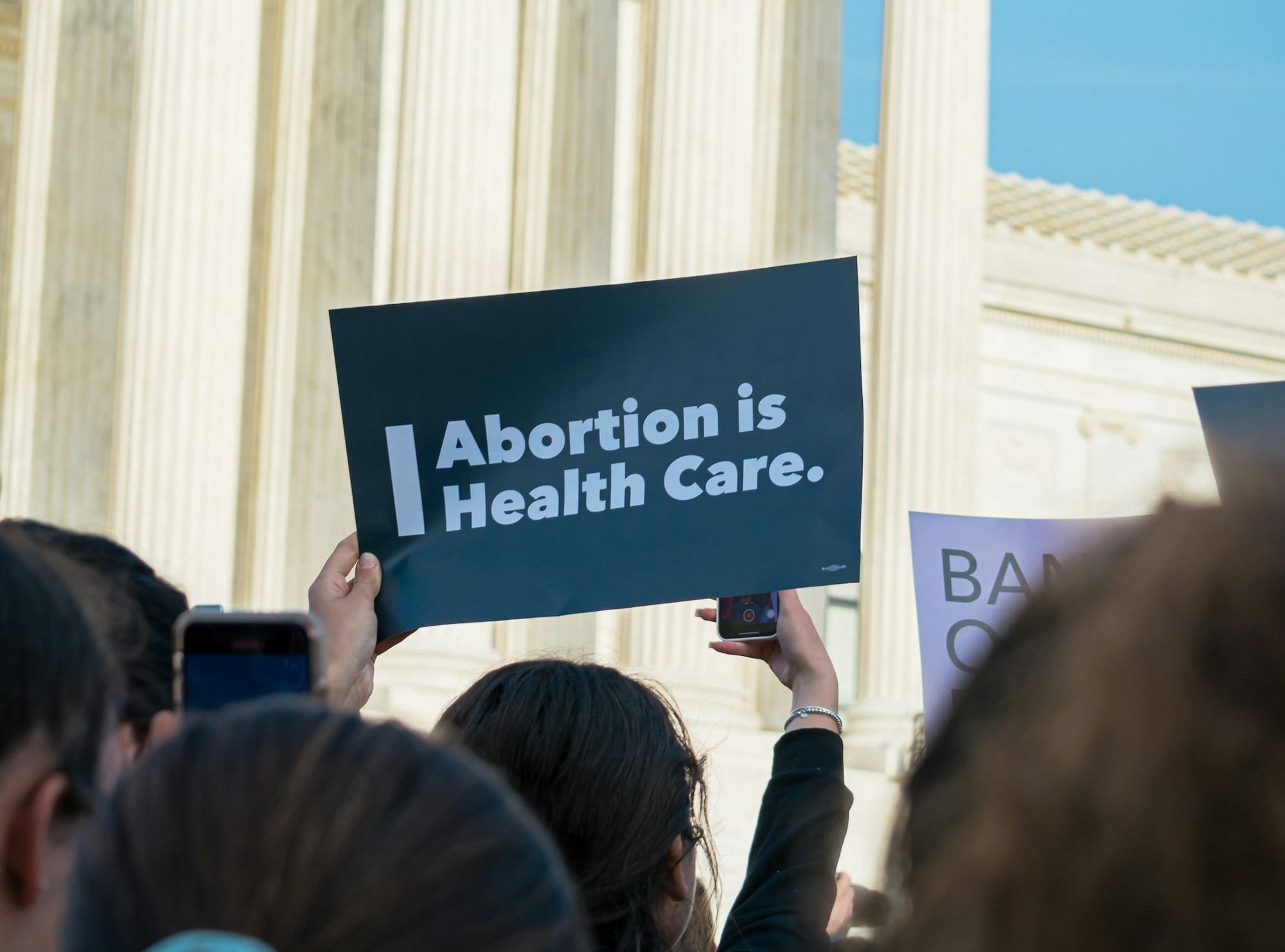
U.S. Senator presses EPA to justify recommendation that water supplies be monitored for abortion and contraceptive medications
CG has been following the efforts of some anti-abortion groups and lawmakers to leverage water regulations to monitor and potentially restrict medication abortion across the U.S., despite a lack of scientific evidence that the use of such medications has any meaningful impact if and when excreted or flushed into water supplies.
Now, it appears that the Environmental Protection Agency has moved to include some medications that can be used in abortion and contraception care on a list of hundreds of pharmaceuticals that it suggests local governments should monitor in water systems.
The agency notes that the list is "non-regulatory and non-enforceable" and that it is "intended to provide information to help states, Tribes, and water systems better characterize potential health risks." But some people are concerned about what the list may spur.
In response, U.S. Senator Ron Wyden issued a letter to EPA Administrator Lee Zeldin in late April, pressing the agency to "[detail] the scientific, peer-reviewed justification for including contraceptives and abortion medications" on the list. "We expect a response by May 5, 2026," Wyden wrote. Read more …
Global health expert elaborates on call to include men and boys in efforts to address sexual and reproductive health needs amid climate shifts
Last year, CG heard from global health expert Medha Gandhi about an article she and her co-authors published in The Lancet Obstetrics, Gynecology, & Women's Health, which called for expanding sexual and reproductive health activities within climate policy and adaptation efforts to include men and boys and to center local communities in building resilience.
Now, with the launch of PCI India's Climate Impact on Sexual and Reproductive Health podcast, Gandhi speaks as a guest to elaborate on these themes. She also points to a major gap in research. "There are far and few studies that highlight what is it that climate is doing — how climate is impacting adolescent boys and what is it going to lead to when it comes to overall sexual and reproductive health outcomes," Gandhi says.
New global partnership to develop tool for midwives supporting mothers and newborns amid heat waves, droughts, floods, and fires
Midwives around the world will soon have a new tool intended to protect mothers and newborns from the effects of extreme weather events — and it can live on their smartphones or tablets.
"It helps build understanding of how both sudden climate shocks and ongoing environmental pressures affect pregnancy, birth, postnatal care, and newborn outcomes, including risks linked to extreme heat, food insecurity, displacement, and infectious disease outbreaks," the International Confederation of Midwives and Maternity Foundation told CG in a jointly prepared response via email. Read more…
Where women and girls face restricted movement, houses collapsing under heavy rainfall may pose gendered safety risks
Women have numbered among the dead as multiple roofs have collapsed under heavy rainfall in Afghanistan in recent weeks.
According to the Associated Press, 13 people were killed "when torrential rainfall caused the roofs of houses to collapse overnight in eastern Afghanistan" in early April. In late April, the Kabul Tribune reported that one woman and four children were killed in a roof collapse in the western part of the country. Last week, KabulNow reported that Taliban officials said a 15-year-old girl and a 22-year-old woman were killed "after the roof of a mud house collapsed following heavy rainfall" in central Afghanistan.
Certainly, not only women and children have been killed in such home collapses. Meanwhile, where the movements of women and girls are often limited — and often to domestic spaces — and where those domestic spaces are structurally and environmentally vulnerable, the safety risks of home collapse may be felt along gendered lines.
In addition to social reforms and climate crisis mitigation, improving the resilience of mud-built homes could help to address these safety concerns. Read more…
Camp Mystic leadership announces Texas facility will not reopen this summer
On Thursday, Camp Mystic said the all-girls facility in Central Texas would not reopen this summer. Last July, 25 campers, two teenage camp counselors, and the camp's director were killed along with over 100 other people in the area when torrential rains caused the Guadalupe River to rapidly rise and flood.
Earlier this month, Texas health officials said the camp may not meet safety requirements to reopen. This week, camp leadership announced it would withdraw its application to operate this season. Read more…
New Lyme disease vaccine moves forward as experts warn of potential rise in tick bites and researchers consider gendered diagnostic differences
Clinical trial data from Pfizer and Valneva indicate that their new vaccine may reduce Lyme disease cases by around 70% when compared to a placebo. The makers aim to advance what could be the first new Lyme vaccine for humans in over two decades.
News of the trial results comes as experts warn of a potentially bad tick season in the U.S. Research suggests that ticks capable of carrying the bacterial infection are spreading into new territory as a result of rising temperatures, while more are surviving milder winters. The disease has been found in North America, Europe, and parts of Asia.
In humans, symptoms generally include fever, headache, fatigue, and a round "bull's-eye" skin rash. Untreated, the disease can progress to severely affect the joints, heart, and nervous system, so early diagnosis and care can be key.
Meanwhile, researchers at Johns Hopkins University School of Medicine recently found that "male and female patients with early Lyme disease present with different signs," with male subjects found to have "more obvious, severe disease" indicators in that early period, according to a news release.
With such differences possibly contributing to delayed diagnosis, an effective vaccine to prevent infection in the first place may be even more important. Read more…
One goal at Climate, Gendered is to bring a spotlight to the reality that proliferating pollution, increasing temperatures, rising seas, extreme weather, habitat loss, and more can uniquely and disproportionately impact girls, women, trans communities, and nonbinary people — especially those from communities of color, Indigenous people, disabled people, immigrants and displaced people, people experiencing poverty, and residents of low- and middle-income countries. We're also interested in the climate crises and concerns that can disproportionately affect men and boys.
This work cannot be done alone or in silos. We appreciate your feedback and observations. And please feel encouraged to share one way you noticed this week that climate and gender connect — and share CG with a friend.
"In Zimbabwe, contraceptive pills were being sold by staff to buy food during the drought. In drought-affected communities, 54% of girls and young women had seen more unintended pregnancy, against 29% elsewhere," Reena Ghelani, CEO of Plan International, told CG.
"The goal is for the [seed savers] to have good forage for their cattle but also earn income from selling the forage and native seeds," Nai-nancy Laizer of Savannas Forever Tanzania told CG. "So it addresses the effects of climate but also generates income to these communities."
"We know how much these women have trained, sacrificed, and prepared for this moment," Siana Austin Hunt of the O'ahu Hawaiian Canoe Racing Association said in a release regarding the race's cancellation, adding, "but the safety and well-being of our people and communities must come first."
"We are not simply providing aid," Nadine Ortega of the grassroots group Tagnawa Hawai'i told CG about supporting survivors of gender-based violence in the wake of hurricanes and floods. "We are supporting women's agency, autonomy, and ability to rebuild their lives on their own terms."