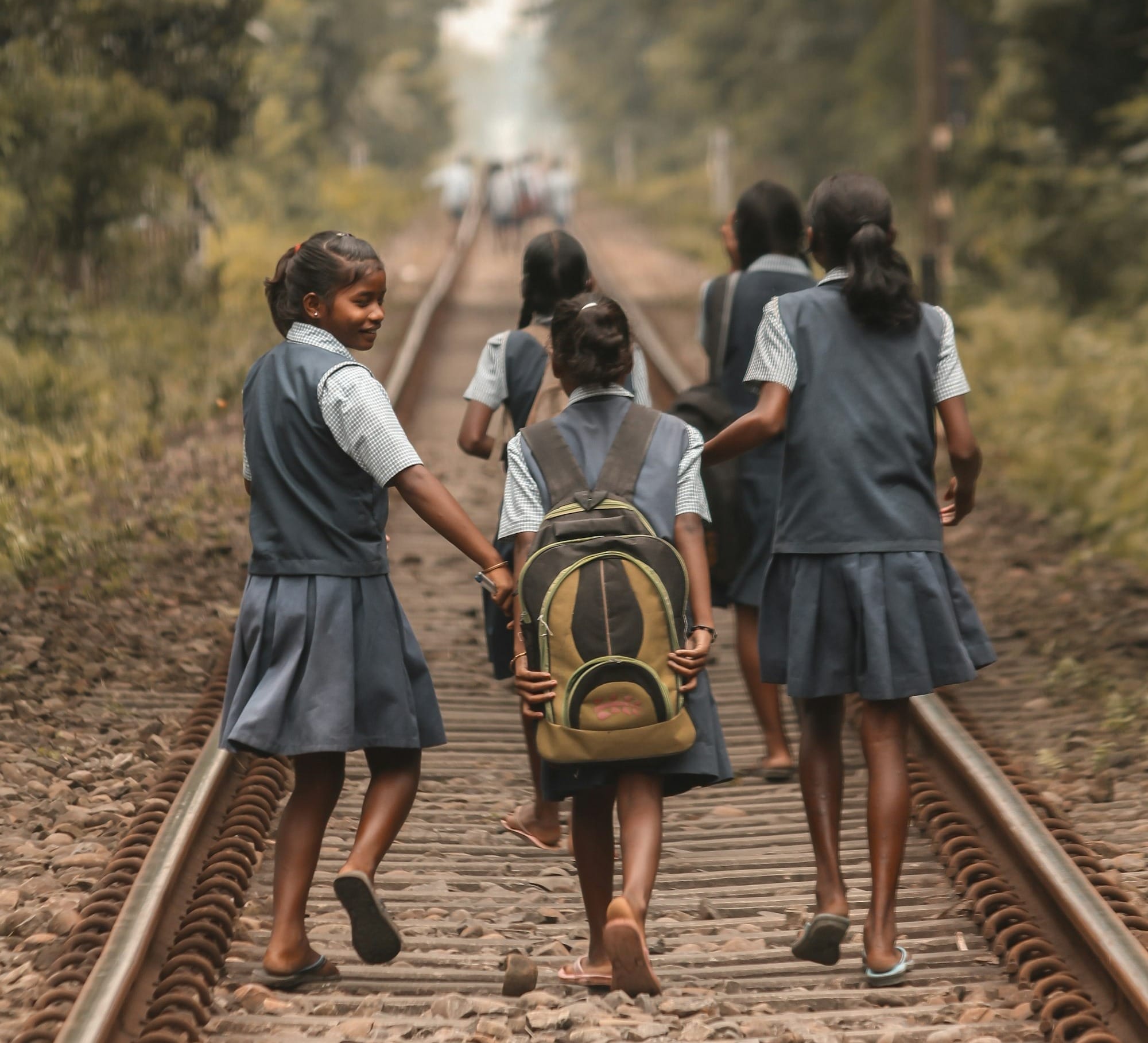
"The climate crisis is reinforcing gender inequality and risks setting back years of progress in girls' education and protection," Keya Khandaker, Research Manager at Plan International, told CG. "It shouldn't be portrayed solely as an environmental issue."
"While it's too early to conclude anything from this data — like that microplastics are involved in prostate cancer development — nevertheless, I think it is still scary that they're in so many prostates," study lead author Stacy Loeb told the Urology Times.
18-year study highlights education, microplastics found in prostate tumors, PFAS and data centers, repro health kits distributed in U.S.
"The climate crisis is reinforcing gender inequality and risks setting back years of progress in girls' education and protection," Keya Khandaker, Research Manager at Plan International, told CG. "It shouldn't be portrayed solely as an environmental issue."
There's a whole lot going on around the world: This weekly brief from Climate, Gendered isn't intended to be exhaustive but rather your chance to spend just a few moments on a handful of items with the potential to disproportionately impact over half the global population — plus, the ideas that might make a difference.
New report estimates huge economic costs of not ending child marriage
Last week, CG heard from the African Union about a report indicating that the continent is off-track to meet the goal of eliminating child marriage by 2030. Another new report, released on March 4 by the Women's Initiative at Columbia University's School of International and Public Affairs, indicates that aid cuts, ongoing conflict, and the climate crisis are among the factors threatening progress toward ending the practice globally.
The co-authors of "Accelerating Efforts to End Child Marriage" also suggest that, in addition to threats to autonomy and overall well-being, the economic costs of child marriage could total $175 billion a year in health care and productivity losses. Addressing the climate-related drivers of the practice, as suggested by experts such as Olubusayo Ruth Akinola of the African Union, could help to mitigate those costs and make an economic case to governments and funders considering support for such measures.
Mother Jones reports that Meta's AI chatbot may block teen access to sexual and reproductive health information
CG has previously covered how unregulated or ineffectively monitored applications of energy-intensive artificial intelligence have been used to harm women and girls. On February 25, Mother Jones reported that Meta's AI chatbot may be blocking teens from accessing content such as information about abortion care. According to the outlet, the policy "contrasts sharply with the firm's handling of child sexual exploitation claims."
"The climate crisis … risks setting back years of progress in girls' education": Study reflects lives of 142 girls in 9 countries over 18 years
The report "Real Choices, Real Lives" reflects the accounts of girls and their caregivers, providing insights on a broad range of subjects, from gender norms to health care, education, and climate change. Released in late February, it is the culmination of an 18-year study led by the humanitarian organization Plan International. Researchers documented the lives of 142 girls, from birth to adulthood, in Benin, Brazil, Cambodia, the Dominican Republic, El Salvador, the Philippines, Togo, Uganda, and Vietnam.
The topics of education and climate change come together in Section 11 of the report. The co-authors documented children missing school following extreme weather events when infrastructural damage closed school buildings or made roads impassable. Schooling was also strained by hits to local economies. When rising temperatures caused crops to suffer, families sometimes struggled to pay school and transportation-related costs.
"As mothers take on additional paid work to cope with livelihood losses, girls are expected to assume greater unpaid care responsibilities at home, while boys are rarely asked to do the same," Research Manager Keya Khandaker told CG via email. "The climate crisis is reinforcing gender inequality and risks setting back years of progress in girls' education and protection. It shouldn't be portrayed solely as an environmental issue."
The compounding effects of rising global temperatures don't end there. PAI President and Chief Executive Officer Nabeeha Kazi Hutchins spoke with Climate One last week about the chain reaction that extreme weather can set off in girls' lives.
"There's research by the U.N. that shows when girls are not in school, their chances for unintended pregnancies increase exponentially. Child marriage increases exponentially," Kazi Hutchins told the radio program.
CG followed up with Kazi Hutchins to learn more.
"Schools are intended to be protective spaces, and when climate disasters shut them down, girls are far more likely to be pulled into domestic labor or forced into decisions, such as child marriage, that permanently derail their education," she wrote via email. "Climate shocks, in other words, can reshape a girl's entire life trajectory."
With education understood as one potential protection for girls' safety, rights, and opportunities, Plan International's report recommends gender- and age-sensitive disaster planning as well as efforts to make school infrastructure more resilient to extreme weather and to speed up the repairs that can keep kids out of school.
But it also urges stronger climate education, including "green" skill-building to enable active leadership in ongoing community efforts and perhaps even future economic opportunities tied to emerging sectors like renewable energy.
"In countries where girls' schooling combines lessons on climate change and green skills with after-school clubs or safe spaces to put those skills into practice, girls are eager and enthusiastic to engage in climate activities," Khandaker told CG. "These spaces are often the only places where girls can formally contribute to bettering their communities, and their participation makes a huge difference."
Kazi Hutchins also emphasized the total value of investing in climate solutions that have the potential to protect girls.
"If we are serious about climate resilience, we must treat the health, safety, and rights of girls as essential infrastructure," she told CG, "not an afterthought."
Microplastics discovered in 9 out of 10 prostate cancer patients enrolled in small pilot study
In a small, single-center study led by NYU Langone Health researchers, tissue samples from 10 prostate cancer patients were evaluated. Microplastics were found in samples from nine out of the 10 patients.
Researchers studied both tumor tissue and noncancerous tissue samples from each patient. According to an NYU press release, "the research team identified plastic particles in 90 percent of tumor samples and 70 percent of benign tissue samples," with the cancerous tissue found to contain "on average 2.5 times" the amount of microplastic material as the noncancerous tissue tested.
The findings have not yet been published in a peer-reviewed journal but were presented last week at the American Society of Clinical Oncology's Genitourinary Cancers Symposium. There, lead author Stacy Loeb spoke with the Urology Times, cautioning against drawing conclusions prematurely.
"While it's too early to conclude anything from this data — like that microplastics are involved in prostate cancer development — nevertheless, I think it is still scary that they're in so many prostates," Loeb told the outlet. "Literally pieces of water bottle are in the prostate tumor. So it seems like this couldn't be a good thing."
Urology professor Michael Eisenberg of the Stanford University School of Medicine, who was not involved in the NYU study, said much of the same. He told NBC News that the new findings don't prove a causal relationship between microplastics and prostate cancer but that "we are finding many signals about the astonishing prevalences of micro/nanoplastics and the concerning associations with health problems."
The science investigating the potential human health impacts of microplastics is still emerging, so experts like Eisenberg and Loeb have called for continued research.
Loeb told the Urology Times that she herself was inspired to pursue this latest study after coming across earlier research published in the New England Journal of Medicine showing that some carotid plaques contained microplastics.
As microplastics research advances, experts like Loeb have suggested mitigating exposure.
Efforts like those based out of the U.N.-backed Women's Empowerment and Learning Center in Thailand's Trat Province, which collects plastic waste from fishing communities and transforms it into consumer goods, can help rid fragile ecosystems of the plastics that break down into smaller and smaller pieces over time and end up in the air, soil, water, and food systems.
Meanwhile, individuals, schools, and businesses can swap out single-use plastic water bottles for reusable glass or stainless steel alternatives, decline plastic shopping bags, reduce unnecessary use of plastic cutlery and packaging — and advocate for equitable access to these resources, including approved at-home water filters.
The moderating approach of cutting back where possible — to reduce personal exposure but also harmful plastic waste in the environment — poses potential benefits. Certain uses of plastics are likely to remain essential for some time, while additional nonplastic options continue to be developed. These might include products for people with disabilities and critical medical supplies.
Researchers at NYU Langone Health took on a related challenge themselves, perhaps providing something of a model for cutting back on plastics. "To avoid contaminating the [tissue] samples with the many kinds of plastic in common medical and laboratory equipment," their press release explained, "the team substituted its tools with those made of aluminum, cotton, and other nonplastic material."
Wisconsin town hall tackles potential benefits and shortcomings of data centers' closed-loop cooling systems
Job creation, land use, the vast amount of energy required to run the data centers that power artificial intelligence, and a multidimensional look at the water use behind AI were just some of the topics tackled at a Milwaukee, Wisconsin, town hall on the technology. More than $46 billion in data center developments have been proposed or are under construction in the state, according to the event's host, the Milwaukee Journal Sentinel.
On the topic of water used to cool the data center infrastructure that heats up when in operation, reporter Caitlin Looby noted in a prerecorded video that the "data centers currently proposed use closed-loop systems, a kind of cooling system where water circulates through the system over and over." This newer cooling system ostensibly reduces overall water usage, though some water may still be lost to evaporation and leaks.
Yet, it's noteworthy for those concerned about potential water contamination that some environmental groups have raised the concern that per- and polyfluoroalkyl substances, or PFAS, may be used in the cooling process and ultimately flushed into wastewater systems.
Exposure to this class of synthetic chemicals, commonly known as "forever chemicals" for their persistence in human bodies and natural habitats, has been linked to serious health conditions. These include certain cancers, decreased fertility, and higher blood pressure in pregnant people, according to the U.S. Environmental Protection Agency.
"If the water discharged to a wastewater treatment plant contained any chemical, like a coolant, that information would have to be disclosed to the wastewater treatment plant so it can be treated," Looby explained at the town hall. But the reporter went on to note that most treatment plants can't remove PFAS, which have been found in drinking water around the world. Experts suspect that much of the existing PFAS water contamination may be traced to agricultural and industrial sources.
In response to a question regarding myths about data centers, Melissa Scanlan — the Director at the Center for Water Policy at the University of Wisconsin, Milwaukee — noted what she's heard about closed-loop cooling systems.
"Last week, I heard a representative from Loudoun Water in Virginia," Scanlan said at the Milwaukee event. "They accept wastewater from almost 200 data centers. … they have received slugs of chemicals that they did not expect, and they've had to scramble to respond. So now they require chemical analysis of the wastewater at every data center before it is discharged to their system, to the municipal wastewater treatment system, because of that experience."
Proponents of AI note that numerous applications of the technology — improving energy efficiency, refining disease diagnosis, strengthening food security and extreme weather warnings — may have the potential to improve lives. But many are also pushing for regulations to protect the energy grid, water resources, and the public.
"First and foremost, you need transparency and disclosures of data in order to even entertain the thought of a scientific analysis," Scanlan said, noting that early in her team's research at the Center for Water Policy, much of the information researchers had to go on was from investigative journalists rather than scientists or the data center operators themselves.
"We really think that what's needed here is legislation that requires a cumulative impact analysis of all the existing and proposed data centers in the state and ideally for a regional area," Scanlan continued, arguing for an analysis that factored in not only water usage and treatment but also potential air pollution, energy usage, utility rates, potential job creation, and more.
Data centers have become a hot topic in the lead-up to the 2026 midterm elections in the U.S., where voters across the political spectrum may press candidates at local, state, and federal levels to speak to potential reforms with clarity.
Center for Biological Diversity and Arizona partners distribute kits to address sexual and reproductive health preparedness when extreme weather disrupts access
"It is often something they haven’t thought about when building their emergency go-bag." That's what Kelley Dennings, a senior campaigner with the Center for Biological Diversity, told CG the nonprofit tends to hear from those who receive the group's free sexual and reproductive health care kits.
The kits — which, according to a press release, include condoms, emergency contraception, menstrual supplies, pregnancy tests, and lubricant — are intended to help address a common gap in disaster preparedness. On March 6, the group will be distributing free kits at the University of Arizona, in partnership with the school's Women & Gender Student Space and the College of Public Health Southwest Center on Resilience for Climate Change and Health.
Too often, when extreme weather events such as floods or wildfires strike, individuals find they don't have access to these essential items. Residents forced to evacuate may not grab these products on their way out the door, emergency shelters may not be fully stocked, and, even as the weather event subsides, compromised roadways and snarled supply chains can make it difficult to buy items at the store.
The issue can be exacerbated by the frequent absence of sexual and reproductive health care from official emergency preparedness frameworks. The Center for Biological Diversity, in another initiative, recently scored all 50 U.S. states on their emergency preparedness checklists — resources that government agencies and nonprofits often provide to help residents stock up on supplies in advance of disasters. According to the Center, Maryland was the only state to earn a perfect score of four points.
Arizona — the state where the Center's main office is located and where Friday's distribution event will take place — scored just one point. Dennings told CG, though, that similar distribution events began in 2024 in collaboration with Florida partners at Really Really Free Markets across the state.
"One of our partners gave away an additional 250 kits in the wake of Hurricanes Milton and Helene," Dennings said. "We repeated the campaign again in 2025 but this is our first time bringing the kits to another state. We are actively recruiting partners to do this across the United States."
When asked how the Center's kit holds up against its own scorecard, Dennings explained that this kit does not include "birthing supplies or simple hygiene products." But she went on to underscore that the hope is for this effort to inform how individuals might build up their own emergency supplies, encourage governments to expand preparedness programs to include these items, and inspire partnerships across climate action and sexual and reproductive health.
When asked about guidance on where and how their kits should be stored to preserve effectiveness, especially given intensifying weather conditions, Dennings noted, "We recommend people store their sexual health emergency preparedness supplies in a safe, dry, climate-controlled space, if possible."
"Period products like pads and tampons will be fine, but condoms and emergency contraception should be properly handled," she continued. "It is also important to look at each product's expiration date and regularly rotate out old supplies."
While the Center for Biological Diversity has not scored emergency preparedness checklists outside of the U.S., there are long-standing global efforts to improve access to sexual, reproductive, and maternal health supplies in the wake of floods, fires, landslides, and droughts.
International humanitarian organizations like the U.N. Population Fund and CARE assemble and distribute their own kits in affected areas. Global health consultant Lorelei Goodyear told The 19th News in its December coverage of the Center's scorecards that the U.S. has been "[kind of] missing the bigger picture in terms of sexual and reproductive health and the all-hazards approach that … is really embraced internationally."
But funding cuts to international aid over the last year could be a barrier. In the title of an article published in January, experts called on stakeholders worldwide "[not to] let sexual and reproductive health in humanitarian and fragile settings become a casualty of aid cuts and crisis fatigue."
One goal at Climate, Gendered is to bring a spotlight to the reality that proliferating pollution, increasing temperatures, rising seas, extreme weather, habitat loss, and more can uniquely and disproportionately impact girls, women, trans communities, and nonbinary people — especially those from communities of color, Indigenous people, disabled people, immigrants and displaced people, people experiencing poverty, and residents of low- and middle-income countries. We're also interested in the climate crises and concerns that can disproportionately affect men and boys.
This work cannot be done alone or in silos. We appreciate your feedback and observations. And please feel encouraged to share one way you noticed this week that climate and gender connect — and share CG with a friend.
"The climate crisis is not gender-neutral, nor is it child-neutral," Olubusayo Ruth Akinola of the African Union told CG in an exchange about a new report and how integrating climate disaster response with child marriage prevention could help end the practice.
"As an African American grandmother and mother, I am appalled that the EPA is abandoning its duty to protect everyone's public health and welfare by revoking the endangerment finding," Almeta Cooper of Moms Clean Air Force told CG.
"Immediate actions must include data collection and support for survivors, which should encompass mental health, medical, and legal services to ensure they receive justice," nonprofit leader Carine Jocelyn told CG about addressing gendered violence at the nexus of armed unrest, poverty, and climate.
"This decision is yet another example of the harmful sentiment that gender or 'social issues' are marginal or distractions," WEDO told CG about reports the treasury didn't contribute to the African Development Fund over climate, gender.