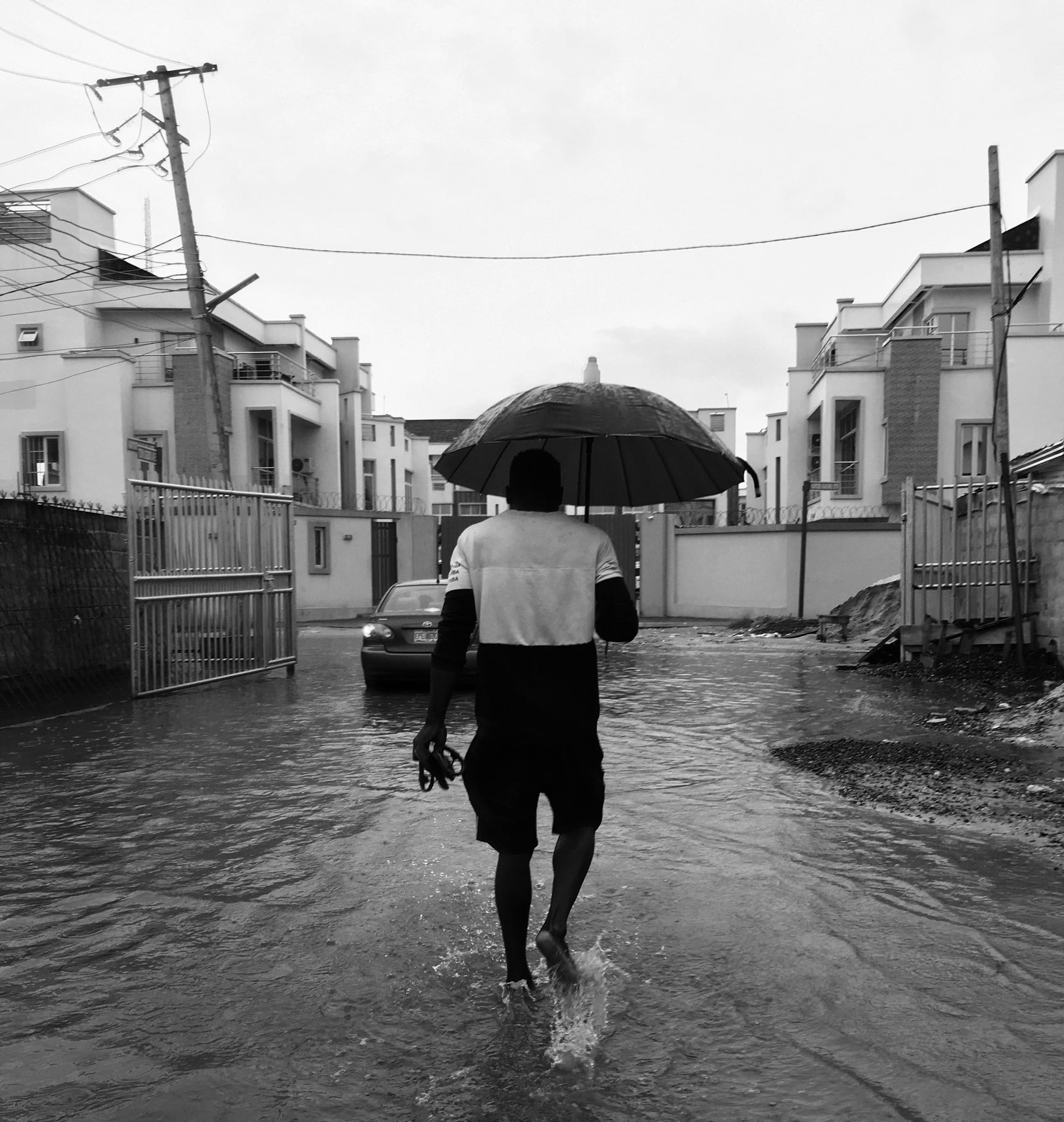
"Until these gaps are closed, Kenya risks remaining trapped in a cycle of rebuild, recover, repeat," Susan Onyango and Hellen Wanjohi-Opil of the World Resources Institute told CG about responding to devastating floods.
"In emergency settings, there is rarely enough time to conduct full household surveys or collect detailed information, and field teams often face staffing, funding, and logistical constraints," study co-author Sonia Akter told CG. "The survey instrument overcomes these challenges."
"Without proper data, we cannot develop appropriate solutions," Vanessa Brizuela, the expert at the World Health Organization who issued the call, told CG. One aim of the effort, which emphasizes community voices and lived experiences, is to generate evidence to inform national adaptation plans.
Mom holds baby above Kenyan floodwaters, WHO funding opp, Bangladesh study could improve data, AI water use set to impact women in Southern Africa
"Until these gaps are closed, Kenya risks remaining trapped in a cycle of rebuild, recover, repeat," Susan Onyango and Hellen Wanjohi-Opil of the World Resources Institute told CG about responding to devastating floods.
There's a whole lot going on around the world: This weekly brief from Climate, Gendered isn't intended to be exhaustive but rather your chance to spend just a few moments on a handful of items with the potential to disproportionately impact over half the global population — plus, the ideas that might make a difference.
Moms face rising gas prices and disrupted health care amid conflict in Middle East
As pregnant people across Iran, Lebanon, and the rest of the region face health threats from burning oil depots and medical care disrupted by wartime conditions, The 19th has reported on additional gendered impacts downstream of a conflict driven at least in part by fossil fuel interests.
Single mothers in the U.S. and elsewhere, already juggling high costs amid an affordability crisis, are seeing household budgets further roiled by increases in gas and energy prices linked to the conflict. The demographic — often managing commutes and child-related errands on just one income — could bring pressure to midterm elections in the U.S. this November, pushing for peace, economic relief, and equitable access to cleaner energy.
Meanwhile, according to a press release issued Thursday by the U.N. Population Fund, "war-related disruptions to major global transport routes in the Middle East are delaying the delivery of life-saving reproductive health supplies for women and girls in humanitarian crises around the world."
Pregnant people in Cuba lack food as one convoy ship arrives to distribute aid amid energy crisis
CG has been following the energy crisis in Cuba, exacerbated by what has been described functionally as an oil blockade imposed by the U.S. earlier this year. This week, the New York Times reported that fuel shortages have been delaying both laboring mothers and medical staff from reaching hospitals in time for smooth deliveries. Food shortages across the country have also been "leading to more underweight pregnant mothers and their newborns."
Meanwhile, one of three ships from the Nuestra América Convoy arrived at the island nation, bringing "14 tons of food, medicine, solar panels, and bicycles to Cuban authorities" on Tuesday, according to Reuters. Some convoy participants — including activists from the group CodePink: Women for Peace — returning to the U.S. afterward told the Miami Herald they were detained for a period at Miami International Airport on Wednesday.
Mexico's navy said on Thursday that two other boats from the humanitarian effort had gone missing. On Friday, the U.S. Coast Guard said the vessels had arrived in Cuba.
Over 90 organizations call on U.S. Secretary of State to "repudiate the notion" that Zambia's HIV aid could be withheld over minerals access
Last week, CG highlighted reporting by the New York Times that a draft memo suggested the U.S. State Department could consider halting the provision of life-saving HIV aid and other health care to Zambia unless certain demands were met. The memo, prepared for Secretary of State Marco Rubio, outlined steps for the Zambian government to receive the aid, provided it gives American businesses greater access to Zambian mines and mineral deposits, including those key to clean energy infrastructure.
On Thursday, over 90 organizations signed a letter calling on Rubio to "immediately and publicly repudiate the notion that the United States would hold lifesaving medical aid hostage to increase leverage in minerals discussions."
As new mothers, pregnant people, and children face heavy burdens of deadly floods, Kenyan experts outline steps forward: "The core barrier is not a lack of solutions"
At one week postpartum, a young mother living near the Ngong’ River carried her newborn up above rising waters to reach temporary shelter. Mothers displaced by recent floods throughout Kenya have shared accounts of infant illness, insufficient food, and decreased breastmilk supplies.
Officials confirmed on Tuesday that the death toll from flash floods affecting at least 21 of the country's counties in March had risen to 88. As reported by the Associated Press, over 30,000 people have been displaced in the wake of the heavy rains.
The River Tana and Nyando River have both burst their banks in recent weeks, submerging settlements, roadways, and farms. Susan Onyango and Hellen Wanjohi-Opil, based in the country's capital of Nairobi and working at the World Resources Institute, told CG that land-use planning and infrastructure upgrades are needed to address such impacts — but that shortcomings in these areas don't represent the real problem perpetuating flood risks.
"The core barrier is not a lack of solutions — it is aligning finance, governance, enforcement, and community action to deliver them." Read more…
Study following Bangladesh cyclone may help to show "sex-disaggregated data can be collected in the immediate aftermath of disasters"
A recent study may help demonstrate that deploying a short survey of straightforward questions could play a part in addressing the gender data gap plaguing disaster response efforts.
"Having this information early supports gender-inclusive recovery efforts and enables evidence-based policy and program design for disaster response and climate resilience," said Sonia Akter, a co-author of the study and Associate Professor at the Crawford School of Public Policy at the Australian National University, in response to a CG inquiry.
To conduct the study, researchers collected data from 2,031 people across 37 coastal villages in Bangladesh one week after Cyclone Remal struck the country in May 2024. They provided respondents with a limited set of clear questions that could be answered in 10 to 15 minutes, aiming not to overburden participants in the wake of personal loss and hardship.Read more…
Call for research aims to explore climate impacts on maternal health, repro care, violence: "Communities are … best placed to speak to how climate is affecting them"
In the absence of robust data, experts are facing an uphill battle to effectively address the growing climate impacts on sexual and reproductive health and rights. But amid recent cuts to aid programs — which some view as a "public health emergency of international concern" — the World Health Organization is pushing ahead to fund research that could help improve the lives of mothers, prevent violence, and strengthen access to medical care.
Through its Human Reproduction Programme, the WHO has issued a call for research proposals exploring how extreme weather events may be affecting maternal health, exacerbating gender-based violence, and disrupting access to contraception and abortion. These key areas were identified, in part, through an exercise led by the organization in 2024 to determine the relevant topics most in need of evidence.
"Without proper data, we cannot develop appropriate solutions," Vanessa Brizuela, the WHO expert who issued the call, told CG. "Evidence-based policies are critical to improved health outcomes." Proposals are due April 12. Read more…
Women and girls could bear the water-loss burden of a data center boom in Southern Africa — but it doesn't have to be that way
Throughout Southern Africa, the use of significant amounts of water to cool data center systems may be draining community supplies, with the potential for sharply felt and gendered impacts.
In the U.S., broad backlash to data center development has been making headlines over the past year in particular, but the energy- and water-intensive infrastructure powering artificial intelligence is a global issue.
Lize Barclay, Senior Lecturer in Futures Studies and Systems Thinking at Stellenbosch Business School in South Africa, told CG about a data center boom across the region where she lives and works and its potential to overlap with the water-collection duties already largely carried out by women and girls.
Still, she said, addressing the issue is within reach, while requiring reform on a few different fronts. Read more…
One goal at Climate, Gendered is to bring a spotlight to the reality that proliferating pollution, increasing temperatures, rising seas, extreme weather, habitat loss, and more can uniquely and disproportionately impact girls, women, trans communities, and nonbinary people — especially those from communities of color, Indigenous people, disabled people, immigrants and displaced people, people experiencing poverty, and residents of low- and middle-income countries. We're also interested in the climate crises and concerns that can disproportionately affect men and boys.
This work cannot be done alone or in silos. We appreciate your feedback and observations. And please feel encouraged to share one way you noticed this week that climate and gender connect — and share CG with a friend.
Dolores Huerta's recent accounts may help to highlight still-lacking protections against gender-based violence in farmworker and environmental advocacy spaces.
"The climate crisis is reinforcing gender inequality and risks setting back years of progress in girls' education and protection," Keya Khandaker, Research Manager at Plan International, told CG. "It shouldn't be portrayed solely as an environmental issue."
"The climate crisis is not gender-neutral, nor is it child-neutral," Olubusayo Ruth Akinola of the African Union told CG in an exchange about a new report and how integrating climate disaster response with child marriage prevention could help end the practice.
"As an African American grandmother and mother, I am appalled that the EPA is abandoning its duty to protect everyone's public health and welfare by revoking the endangerment finding," Almeta Cooper of Moms Clean Air Force told CG.