"While we don't position AquaBloom as a 'gender product,' we do see it as a practical tool that can help make access to productivity gains more equitable," AquaBloom Founder and Chief Executive Officer Michelle Arsjad told CG.
"Leptospirosis can be more serious in certain populations, including pregnant individuals, and may pose risks to both the pregnant person and the fetus," Department of Health spokesperson Adam LeFebvre told CG. "However, the risk can be managed with precautions and early medical care."
"Burden was estimated to be disproportionate in South Asia, the Middle East, and Africa," the co-authors wrote in their report. "Implementing regulatory measures to limit exposure to phthalates as a class could help reduce the global [preterm birth] burden."
Burning this could disproportionately impact the health of women and children — joining clean energy efforts with waste management could help
"Women and girls bear disproportionate health and safety risks, including physical burns, contact with contaminated waste, and exposure to toxic emissions from plastic combustion," Chizoba Obianuju Oranu, a researcher at the University of Nigeria, Nsukka, told CG.
In addition to Climate, Gendered's weekly news brief, we'll occasionally bring you a deep dive on one topic, problem, or idea that might make a difference. Tell us about the stories you'd like to see featured at CG.
The lead author of a survey-based study looking at "cities in 26 countries in the Global South" said in a January news release that a practice linked to serious health risks "is far more widespread than anyone realized."
One in three of the more than 1,000 survey respondents in the study— from community leaders to government workers — "said they were aware of households burning plastic," according to the release.
Lead author Bishal Bharadwaj, currently a researcher at the University of Calgary and previously at the Curtin Institute for Energy Transition, suggested that a lower level of awareness about burning plastics as a household fuel has been driven by its use in already marginalized — even invisibilized — low-income communities.
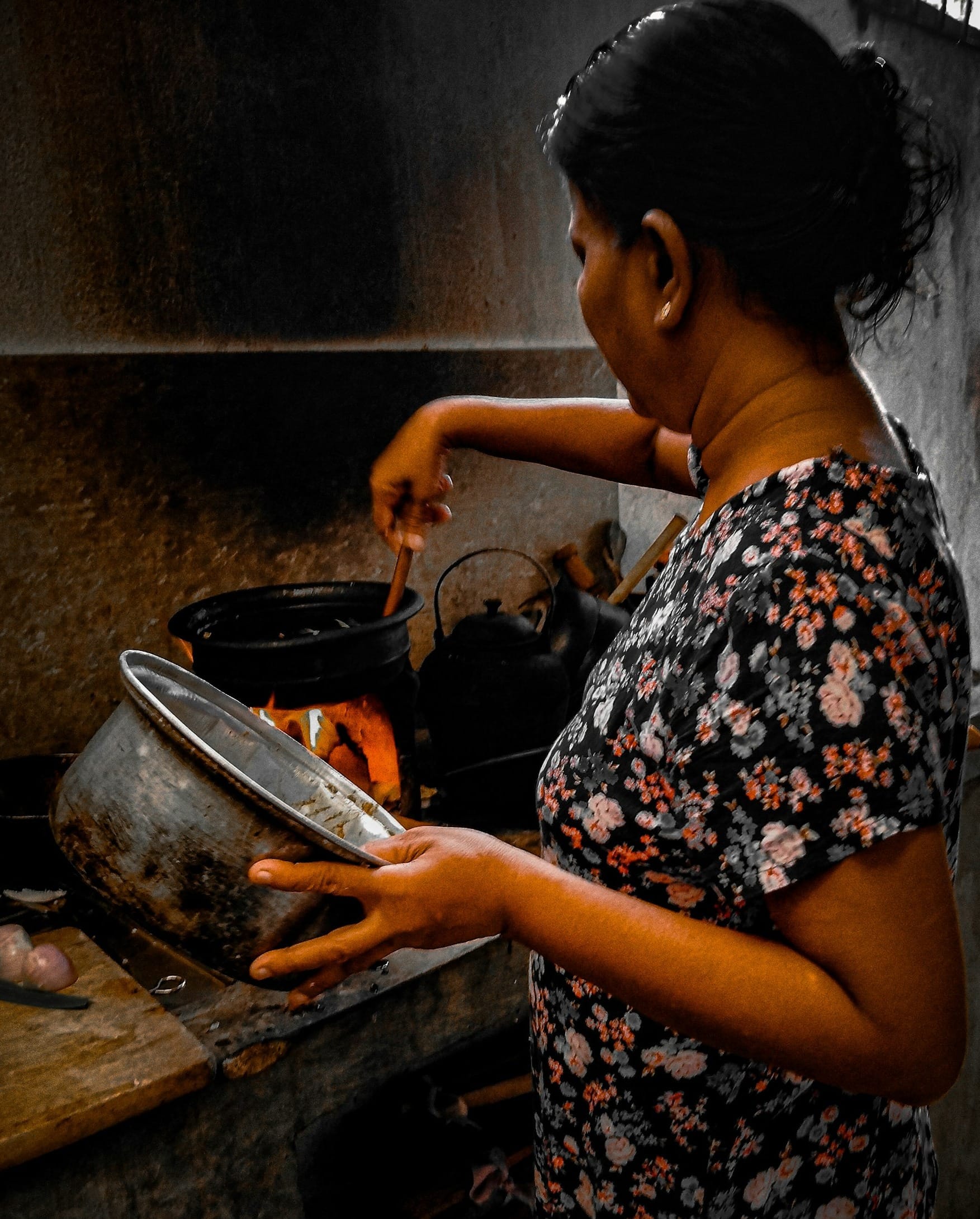
The practice appears to be driven by inequitable access to plastic waste disposal and by the prohibitively high costs of cleaner fuel sources, according to the study, published earlier this year in Nature Communications. "We found evidence of people burning everything from plastic bags and wrappers to bottles and packaging, just to meet basic household needs," Bharadwaj said in the statement, with families often burning the plastics using simple stoves inside their homes.
Poor indoor air quality is known to disproportionately impact women and children due to time spent inside caregiving. With this in mind, CG reached out to the study co-authors about the gendered dimensions of plastic waste as a household fuel — and about the strategies that might help mitigate both health risks and environmental impacts.
"Women and girls bear disproportionate health and safety risks, including physical burns, contact with contaminated waste, and exposure to toxic emissions from plastic combustion," co-author Chizoba Obianuju Oranu, a researcher at the University of Nigeria, Nsukka, told CG via email.
"Women and girls are typically responsible for meal preparation and spend more time near cooking areas, [so] they face higher levels of inhalation exposure, increasing the likelihood of respiratory illness and other adverse health outcomes."
The risks are very real, but so too are the potential solutions — and they may bring multiple benefits.
"Often access to clean energy and improvement of waste management are considered different aspects of development, and efforts are siloed," Bharadwaj told CG. But to effectively address the hazards of burning plastic waste, families need more equitable, affordable access to safer fuels and to safer waste disposal methods. Agencies that manage to integrate these aims could help to improve public health, reduce emissions, and tidy litter.
"Raising awareness of the health and environmental risks associated with plastic burning is essential, particularly through targeted community engagement and women's groups," Oranu said.
In just one related example, in Dimapur, in the state of Nagaland, India, women are reportedly drawing on traditional Indigenous knowledge to implement nature-based solutions to the plastic waste crisis. "For instance," according to India Development Review, "practices such as wrapping produce in banana leaves naturally discourage the use of single-use plastics."
High-income communities and countries can take responsibility for helping to reduce the use of polluting plastics too — while ensuring equitable access to safe alternatives and remaining mindful of when plastic products are needed. They can also be a part of the solution by funding cleaner energy projects where they're needed most.
Meanwhile, in addition to improving trash clean-up and subsidizing cleaner energy in communities where plastics are commonly burned, Oranu told CG, "Pro-environmental interventions must move beyond merely expanding 'access' to strengthening 'agency,' ensuring that women have meaningful decision-making power within households regarding energy use and waste management."
One goal at Climate, Gendered is to bring a spotlight to the reality that proliferating pollution, increasing temperatures, rising seas, extreme weather, habitat loss, and more can uniquely and disproportionately impact girls, women, trans communities, and nonbinary people — especially those from communities of color, Indigenous people, disabled people, immigrants and displaced people, people experiencing poverty, and residents of low- and middle-income countries. We're also interested in the climate crises and concerns that can disproportionately affect men and boys.
This work cannot be done alone or in silos. We appreciate your feedback and observations. And please feel encouraged to share one way you noticed this week that climate and gender connect — and share CG with a friend.
"Leptospirosis can be more serious in certain populations, including pregnant individuals, and may pose risks to both the pregnant person and the fetus," Department of Health spokesperson Adam LeFebvre told CG. "However, the risk can be managed with precautions and early medical care."
"Burden was estimated to be disproportionate in South Asia, the Middle East, and Africa," the co-authors wrote in their report. "Implementing regulatory measures to limit exposure to phthalates as a class could help reduce the global [preterm birth] burden."
Researcher Sherri Mason told National Public Radio that the move to monitor substances like microplastics in drinking water is "an important first step." Earthjustice attorney Katherine O'Brien told the outlet the effort is "a distraction."
"What we've found is that when a solution is simple, low-risk, and shows visible results quickly, it becomes more accessible — including to women farmers who may not control large budgets or land," AquaBloom Founder and Chief Executive Officer Michelle Arsjad told CG.