"The climate crisis is not gender-neutral, nor is it child-neutral," Olubusayo Ruth Akinola of the African Union told CG in an exchange about a new report and how integrating climate disaster response with child marriage prevention could help end the practice.
"As an African American grandmother and mother, I am appalled that the EPA is abandoning its duty to protect everyone's public health and welfare by revoking the endangerment finding," Almeta Cooper of Moms Clean Air Force told CG.
"Women and girls bear disproportionate health and safety risks, including physical burns, contact with contaminated waste, and exposure to toxic emissions from plastic combustion," Chizoba Obianuju Oranu, a researcher at the University of Nigeria, Nsukka, told CG.
Solar power in Cuba, ending child marriage exacerbated by climate risks, autism and wildfire smoke, getting PFAS out of firefighter gear
"The climate crisis is not gender-neutral, nor is it child-neutral," Olubusayo Ruth Akinola of the African Union told CG in an exchange about a new report and how integrating climate disaster response with child marriage prevention could help end the practice.
There's a whole lot going on around the world: This weekly brief from Climate, Gendered isn't intended to be exhaustive but rather your chance to spend just a few moments on a handful of items with the potential to disproportionately impact over half the global population — plus, the ideas that might make a difference.
Park ranger fired for helping to hang trans pride flag at Yosemite sues U.S. government for illegal termination
Last month, CG briefly touched on the 2025 firing of park ranger and biologist Shannon "SJ" Joslin by the U.S. National Park Service. Joslin, who is gay and nonbinary, was fired by the NPS after Joslin was allegedly involved in hanging a large transgender pride flag from a rockface in Yosemite National Park — an apparent rebuke of what Joslin's attorneys pointed to as attacks on trans rights by the Trump administration.
This week, Joslin filed a lawsuit against the Department of the Interior over illegal termination.
According to a press release from the organization Public Employees for Environmental Responsibility — or PEER — the suit cites "a violation of [Joslin's] First Amendment rights and violations of the Privacy Act."
"Dr. Joslin exercised their First Amendment rights and is being punished to send a clear message — speech the administration doesn't like will not be tolerated," Joanna Citron Day, General Counsel at PEER and a lawyer representing Joslin, said in the release. "Dr. Joslin was illegally fired and should be reinstated immediately."
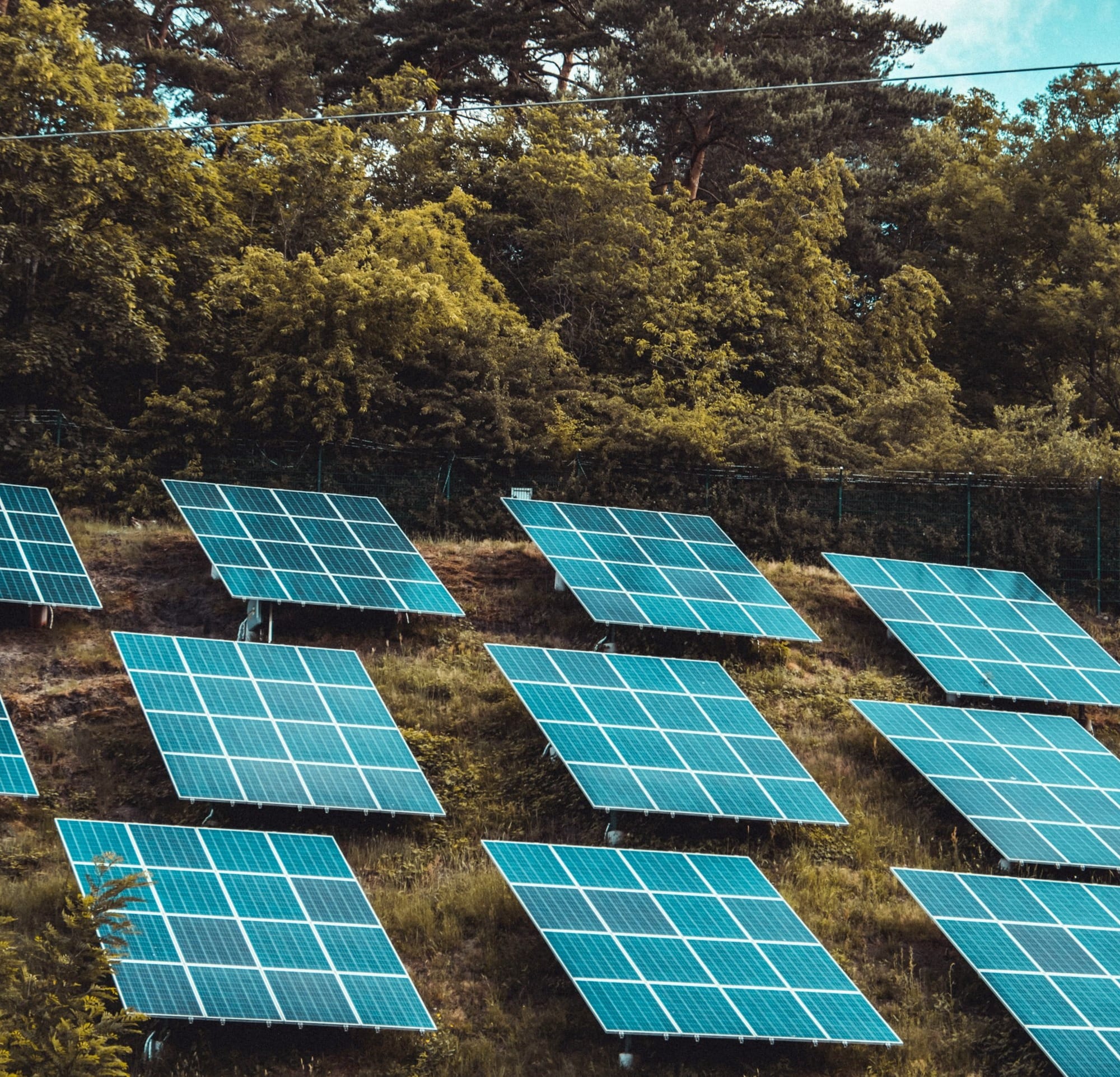
Improving equitable access to renewable energy could help Cuban families amid severe fuel shortages
Cuba is experiencing extreme fuel shortages amid an ongoing economic crisis and following U.S. government actions that the New York Times has said are "functioning as" an oil blockade.
The U.S. halted oil shipments from Venezuela to the island nation after taking President Nicolás Maduro into custody in January. In an executive order later that month, the Trump administration threatened to impose tariffs on other countries that sent oil to Cuba. Mexico, long an ally of Cuba, then paused such shipments. Now, expanding cleaner energy access may be among the tools for addressing worsening conditions on the island.
Reports of blackouts there have surged in recent weeks, along with reports of critical lapses in waste management as trash trucks and other vehicles lack sufficient fuel. Aniliet Rodríguez, pregnant and hospitalized for anemia care, told the Associated Press about current health system strains in Havana: "There's no bread, no milk for nutrition … . There are no medicines." And last week, Cuban journalist Lisandra Fariñas wrote for Truthdig about "women cooking dinner in the dark with charcoal" in the capital city.
Cuba has reportedly been working to scale up renewable energy infrastructure in recent years in an effort to address the country's vulnerability to power grid collapse caused by intensifying hurricanes and to reduce reliance on expensive and polluting fossil fuels, in line with U.N. goals. This has included efforts to expand energy access into rural and low-income communities that have not been connected to the grid. A multi-year collaboration between the Cuban and Canadian governments has aimed specifically at improving women's access to and leadership in the renewable sector.
Canada has announced plans to provide humanitarian aid to Cuba amid persistent fuel shortages. Mexican Navy ships have already delivered donations of essential items. Russia has also shown support. According to Jacobin, "the Nuestra América solidarity convoy is mobilizing to provide direct aid to the Cuban people," which is expected to include solar panels.
One of the convoy organizers, David Adler, spoke with the outlet this week about a notable expansion in renewable energy. "I was speaking with a friend just yesterday from Camagüey who was saying that she'd never seen solar in her home community," Adler said. "She was just back there two weeks ago, and there were four new providers of solar panels and production to install them in homes and institutions."
Training disaster response workers to spot and stop child marriage could help end the practice: "The climate crisis is not ... child-neutral"
A report released by the African Union in mid-February indicates that the continent is not on track to eliminate child marriage by 2030, a Sustainable Development Goal set by the U.N.
Rising global temperatures are among the drivers for child marriage, with extreme weather events and other environmental crises interrupting access to education and its protections, increasing displacement and its potential to raise sexual violence risks, and straining agricultural economies.
But this means that those committed to addressing the impacts of climate change can get involved in helping to end child marriage, too.
The "Report of the African Union Champion on Ending Child Marriage in Africa" has noted some solutions that may help mitigate climate-related risks. Olubusayo Ruth Akinola — Head of the Social Welfare, Drug Control, and Crime Prevention Division of the Union — told CG that these strategies, such as training disaster workers to look out for child marriage risks while responding to floods and droughts, could also be adopted by other countries facing the threats that global warming can bring. (This particular strategy may remind some of the effort to train flight attendants to spot the signs of human trafficking in the course of their travel-based jobs.)
Akinola said further measures could include integrating child marriage prevention into national climate adaptation plans, but she also got more specific in her recommendations.
Shock-responsive cash transfers are direct transfers of money to help families meet their immediate needs after a disaster. "[Prioritizing] households with adolescent girls in high-risk zones" for these transfers could help prevent girls from entering or being forced into harmful relationships due to economic insecurity.
Improving educational continuity amid floods, droughts, and heat waves could help too. Access to education is understood as protective against child marriage, and Akinola named rapid school re-enrollment, climate-resilient school infrastructure, and comprehensive sex and rights education as key.
Sharing advice with other regions, she encouraged stakeholders to break down silos and collaborate, including where financing is involved and with the suggestion to "[link] climate adaptation funding with adolescent empowerment."
That's because, as Akinola concluded, "The climate crisis is not gender-neutral, nor is it child-neutral."
New studies suggest potential links between prenatal wildfire smoke exposure and childhood autism
Exposure to wildfire smoke has long been acknowledged as a human health hazard, posing respiratory and cardiovascular risks. Disproportionate impacts on first responders, people experiencing chronic illness, children, and pregnant people have also become more widely understood.
More recently, however, researchers have been exploring the potential impacts of prenatal exposure to this type of air pollution, including an increased risk of preterm birth. Now, two separate studies, each published in peer-reviewed journals this year and assessing populations in California, are a part of what the environmental news outlet Grist called "growing evidence [pointing] to [a] link" between childhood autism and exposure to wildfire smoke during pregnancy.
The co-authors of the first study, published in January in Environmental Science and Technology, wrote in their abstract that "prenatal exposure to wildfire smoke may increase risk of autism among children." CG heard from lead author David Luglio about his team's findings and their related work.
The post-doctoral fellow with Tulane University's Celia Scott Weatherhead School of Public Health and Tropical Medicine recently published another study, this one looking at potential links between childhood autism and prenatal exposure to extreme heat. The researchers in that study found that "exposures to high nighttime temperature during early and late pregnancy were associated with autism risk in children," but noted that additional research was warranted to explore why high daytime temperature was not linked to the same risk.
"As a result of climate change, both wildfires and extreme temperatures are increasing in frequency and severity over time, and of course, wildfires are partly caused by extreme temperatures themselves," Luglio told CG via email. "We did not directly address this through these separate papers, but it is also important to understand if and how these wildfire and heat effects on autism development combine, especially given that they will likely co-occur in the future."
CG asked Luglio about how the other wildfire smoke study, published in Environmental International in February and not conducted by his team, might complement or otherwise interact with his team's work.
"The other study used wildfire smoke exposure data from a different source and analyzed its effects on autism in a different dataset. Nonetheless, they also found similar overall results," Luglio said, while noting differences.
"Importantly, their exposure metrics were different from ours and they conducted distinct analyses into the influence of factors such as urbanicity, among others. Altogether, these papers allow us to have a more comprehensive picture of how wildfire smoke is associated with autism and how vulnerability differs from one group or area to the next."
Previous research has shown that communities of color and low-income communities face disproportionate health risks from wildfires. According to AfroLA, for example, Black women may face increased risks from absorbing lead released into the air by wildfires, due in part to higher rates of iron deficiency.
Experts generally caution against fear-mongering and panicking over prenatal risks of various stripes. And the autism community encourages wider understanding of neurodiversity as well as improved funding and meaningful support for people who experience disabilities — especially during a time when autism has been stigmatized, politicized, and sometimes met with harmful misinformation. A number of experts in the field have suggested that a combination of genetic and environmental factors — not one factor alone — may influence autism.
Meanwhile, people who seek to limit wildfire smoke and extreme heat exposure in and out of pregnancy may wish to take some simple steps to support overall health. This would be easier, of course, if equitable access to basic resources were improved.
"Communities, agencies, and governments could provide easier access to fans or air conditioning or even provide cooling centers if necessary," Luglio said of mitigating exposure to extreme heat. These same bodies could also improve access to effective masks and respirators well before a wildfire breaks out and in consultation with maternal health experts.
Meanwhile, a just global transition to clean energy systems could mitigate both rising temperatures and wildfire risks worldwide.
U.S. Forest Service has reportedly stopped issuing PFAS-containing firefighter pants
ProPublica said this week that the U.S. Forest Service "has stopped distributing" gear containing per- and polyfluoroalkyl substances, or PFAS, following the outlet's early-February reporting that the agency knew for years the protective pants it issued to wildland firefighters contained the potentially harmful "forever chemicals."
Known as such for their persistence in habitats and human bodies, PFAS have been used for some time in firefighters' "turnout gear" and in water- and stain-resistant fabrics to repel liquids. In addition to the staying power of PFAS, exposure risks may be amplified by the chemicals' prevalence in a wide variety of items, from some nonstick cookware to cosmetics, personal care items, cleaning products, other job-related tools, and more.
Exposure to certain PFAS has been linked to serious health conditions, including cancers and reproductive health concerns, though, as ProPublica reporter Abe Streep told KUOW Puget Sound Public Radio, "the science is still evolving" in terms of mapping out the risks conclusively.
Some exposure risks may also bear gendered dimensions, such as those related to gendered labor dynamics. For example, while women's representation in firefighting has seen improvements, 2021 data from the Bureau of Labor Statistics indicated that about 95 percent of firefighters in the U.S. were men.
Meanwhile, awareness and innovations have helped to reduce the use of these chemicals, and many municipal fire departments have been working to transition to PFAS-free protective uniforms. The Vancouver fire department in Canada said in 2024 it was becoming the first fire department in North America to make the shift to PFAS-free gear. Departments in New Hampshire and Connecticut in the U.S. reportedly followed suit.
Addressing this issue as well as PFAS in firefighting foam has also become central to multiple lawsuits and municipal efforts pushing for accountability and change. The International Association of Fire Fighters announced in 2023 that it had retained law firms "to fight for those made sick by PFAS forever chemicals."
One goal at Climate, Gendered is to bring a spotlight to the reality that proliferating pollution, increasing temperatures, rising seas, extreme weather, habitat loss, and more can uniquely and disproportionately impact girls, women, trans communities, and nonbinary people — especially those from communities of color, Indigenous people, disabled people, immigrants and displaced people, people experiencing poverty, and residents of low- and middle-income countries. We're also interested in the climate crises and concerns that can disproportionately affect men and boys.
This work cannot be done alone or in silos. We appreciate your feedback and observations. And please feel encouraged to share one way you noticed this week that climate and gender connect — and share CG with a friend.
"As an African American grandmother and mother, I am appalled that the EPA is abandoning its duty to protect everyone's public health and welfare by revoking the endangerment finding," Almeta Cooper of Moms Clean Air Force told CG.
"Immediate actions must include data collection and support for survivors, which should encompass mental health, medical, and legal services to ensure they receive justice," nonprofit leader Carine Jocelyn told CG about addressing gendered violence at the nexus of armed unrest, poverty, and climate.
"This decision is yet another example of the harmful sentiment that gender or 'social issues' are marginal or distractions," WEDO told CG about reports the treasury didn't contribute to the African Development Fund over climate, gender.
"Climate justice and social injustice are completely interlinked," said Isabel González Whitaker of Moms Clean Air Force during a virtual event focused largely on the actions of federal agents across the U.S. targeting immigrants and others.